Safety gates buyer's guide
A safety gate is a robust and reliable solution for securing access points and hazardous zones in industrial environments. It serves as both a physical barrier and a visual warning. In doing so, safety gates help prevent hazardous situations and accidents.
In industrial environments like warehouses, production plants, and logistics centers, safety is paramount. Safety measures are a legal requirement, but they are also essential for keeping processes efficient, reducing costs, and protecting employees.
When you decide to invest in safety gates, there are several aspects to take into account. In this buyer’s guide, we discuss the key factors you should consider when investing in safety gates.
Explore our catalog Contact us

Table of contents
What should you consider when buying safety gates?
What should a safety gate protect?
Learn why investing in safety gates is essential for workplace safety.
Five criteria for choosing the right safety gate
Which five criteria should you consider to choose the right safety gate?
Four key considerations for installing safety gates
Understand why correct installation is vital for ensuring the effectiveness and durability of safety gates.
What should you do if a safety gate is damaged or defective?
Learn what to do if a safety gate is damaged or defective.
What should your budget be, and what are the long-term costs of safety gates?
How do you set your budget—and why is it important to look beyond the initial purchase price?
Certification and standards for safety gates: what should you look for?
Learn which certifications guarantee quality and reliability.
Conclusion: Safety as a smart investment
Safety gates as part of a complete solution
Personalized advice from our safety experts
Are you considering investing in safety gates? You should consider several factors, including the risks of your work environment, the intensity of vehicle traffic, and the level of protection required. At Boplan, we’re happy to help you make the right decision.
Would you like a quote or more information about our safety gates? Get in touch with our team of experts for safety advice tailored to your needs.
What should a safety gate protect?
When you invest in safety gates, you are primarily investing in people’s safety. Employees and visitors in industrial environments face the risk of an accident every day. A safety gate protects these people from potential hazards by clearly marking off safe areas.

At ground level, collisions with vehicles and machinery are the main risk. Safety gates act as a physical and visual barrier that clearly separates pedestrian areas from transport zones.
At height, e.g., on mezzanines or loading platforms, the main risk is falling. Falls can have very serious consequences. Safety gates provide the necessary fall protection. In this way, they prevent damage and potentially life-threatening situations.
Five criteria for choosing the right safety gate
Safety gates come in various designs. To choose the right safety gate, it is important to take a few key factors into account. Below are the five main selection criteria for helping you determine which safety gate best fits your needs and circumstances.
4. Ease of use and maintenance
A user-friendly safety gate that is easy to operate and maintain both reduces operating costs and encourages correct and consistent use. Choose a model that is easy to inspect and keep clean.
5. Compliance and certification
Always check that safety gates comply with international safety standards and have the necessary certifications. This helps you be sure of their quality and reliability and that they comply with legal safety requirements. Review their certificates and approvals before making your final investment decision.
Based on these criteria, you can make an informed choice and invest in safety gates that match your safety needs and your budget. Ask for expert advice to make your decision even easier.
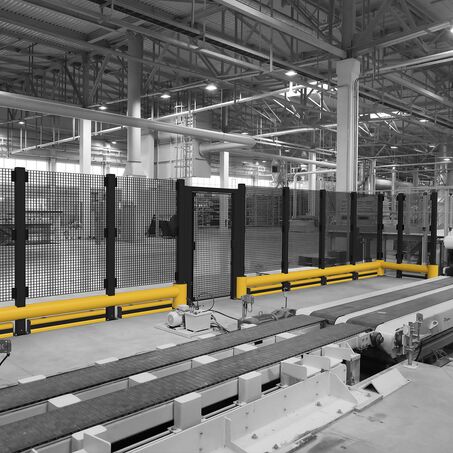
Our safety gates:




Four key considerations for installing safety gates
Correct installation is essential for ensuring the effectiveness and durability of safety gates. Here are a few key factors to consider:
3. Are there on-site restrictions?
Not every location is equally suited to every type of safety gate. Consider factors like available space, height differences, or infrastructure like pipes and cables. You should look for a safety gate that fits the specific constraints of your site.
4. Consider options for upgrades and adaptation
Consider whether the safety gate you have chosen can be upgraded or adapted in the future as your business operations change. Flexibility ensures that your investment is future-proof and remains effective even after your environment or processes change.
Tip: Plan your installation to minimize disruptions to the area, and involve professionals to ensure optimal performance.

What you should do if a safety gate is damaged or defective
If a safety gate becomes damaged or defective, you must act immediately to ensure safety. First, inspect the damage in order to assess its extent and to determine whether temporary measures are needed to avoid further risks. Mark and isolate the damaged area with safety tape or temporary barriers until repairs are completed.
Opt for modular systems. Modular safety gates are built from individual parts, so, if damaged, you only need to replace the affected component. This reduces repair costs, minimizes downtime, and enables fast repairs. In addition, modular systems are easier to maintain, adapt, and upgrade, which increases the flexibility and durability of your investment.
What is your budget, and what are the long-term costs of safety gates?
When investing in safety gates, your available budget naturally plays an important role. However, it is crucial to look beyond the initial purchase price and focus on what a safety gate can deliver in the long term, especially how much it can save you. Below, we explain how to best assess these costs:


Certification and standards for safety gates: what should you look for?
When considering an investment in safety gates, it is wise to check whether they comply with relevant standards and have the necessary certifications. Certifications are proof that safety gates are safe, reliable, and effective. What exactly should you look for?
1. TÜV Nord certification: independently tested
One of the most important certifications for safety gates is the TÜV NORD certificate. This independent assessment confirms that the safety gate has been rigorously tested for impact resistance, safety, and quality. With TÜV NORD-certified safety gates, you are investing in quality products that deliver proven protection in line with recognized international standards.
2. Testing standards: UNI/TS 11886-1
Check whether the safety gates have been tested in accordance with recognized impact standards like UNI/TS 11886-1. This standard guarantees that safety gates are effectively tested under realistic impact conditions, ensuring reliable protection in your specific working environment.

DG250F
a TÜV NORD-certified safety gate
One example of a TÜV NORD-certified safety gate is the DG250F. This gate provides protection against impacts up to 16 kJ and is the first and only gate in the world to be tested on both beams and posts according to the UNI/TS 11886-1 standard.
In many cases, a tailored proposal is the best option. Do your safety solutions need to satisfy specific standards? At Boplan, we are happy to advise you and provide a tailored solution that matches your industry and working environment. Get in touch with us before making your final decision.
Conclusion: Boplan safety gates are a smart investment
6 factors that determine your choice of safety gates
By investing in high-quality polymer safety gates, you benefit not only from effective protection and visible safety, but also significant long-term cost savings. Less maintenance, less damage, less downtime, and lower risks make safety gates a smart and durable investment.
When selecting a safety gate, it is important to take the following aspects into account.
- What do you want to protect?
For example: protecting people from fall hazards, vehicles from collisions, or goods and equipment from damage.
- Are there environmental or industry-specific requirements?
For example: temperature, chemical exposure, or traffic intensity
- Impact resistance
How strong do the safety gates need to be?
- Ease of use and installation
Do you expect the safety gates to be easy to install and quick to replace?

Safety gates as part of a complete solution
Combine with other safety solutions
Safety gates provide crucial protection against accidents and falls, but they are rarely the only safety measure. In industrial environments, safety gates are usually combined with safety barriers, bollards, pedestrian protection, or machine guards. Thanks to their modular design, our safety solutions can be combined seamlessly. This enables you to create a complete, efficient safety system that is perfectly tailored to the hazard zones in your workplace.
Also explore our buyer’s guide on industrial safety barriers to discover safety solutions that can be seamlessly combined with safety gates.
Safety gates in practice: customer stories


Frequently asked questions (FAQ) about safety gates
The service life of safety gates depends on the materials used and the level of maintenance. Polymer safety gates generally have a longer service life and require minimal maintenance. Periodic cleaning is sufficient to keep them functional for years.
Many safety gates can be installed in-house thanks to their modular design. For complex situations or larger systems, we recommend professional installation.
Polymer safety gates are typically more flexible, corrosion resistant, and low maintenance, while metal gates may feel more rigid but are more susceptible to corrosion and usually need more frequent maintenance. Read more about the differences between polymer and steel in this blog article.
Yes, our safety gates satisfy all relevant safety standards and have the necessary certifications, giving you certainty about their quality and safety.
Yes, certain models are specifically designed for both indoor and outdoor use thanks to their robust construction and weather resistance.
Start by identifying what you want to protect (people, vehicles, equipment), how frequently the gate will be used, and any specific environmental factors. Our team will be happy to help you make the right choice.
Inspect the damage immediately and contact us. With modular systems, damaged parts can be replaced quickly and easily.
Yes, thanks to their modular design, our safety gates can easily be upgraded, relocated, or adapted to changing circumstances.
Our safety gates typically come with an extended warranty period. Specific details can be found in the respective documentation or requested from our team.