Why you should include safety in the design phase of industrial buildings
In industrial construction projects, the focus is usually on capacity, efficiency, and flow. Safety infrastructure then comes into play later, once the building has already been designed or the first operational flows have been determined. However, this approach has significant drawbacks. If you only factor in safety later on, you risk restricting yourself in terms of logistics, flexibility, and cost efficiency.
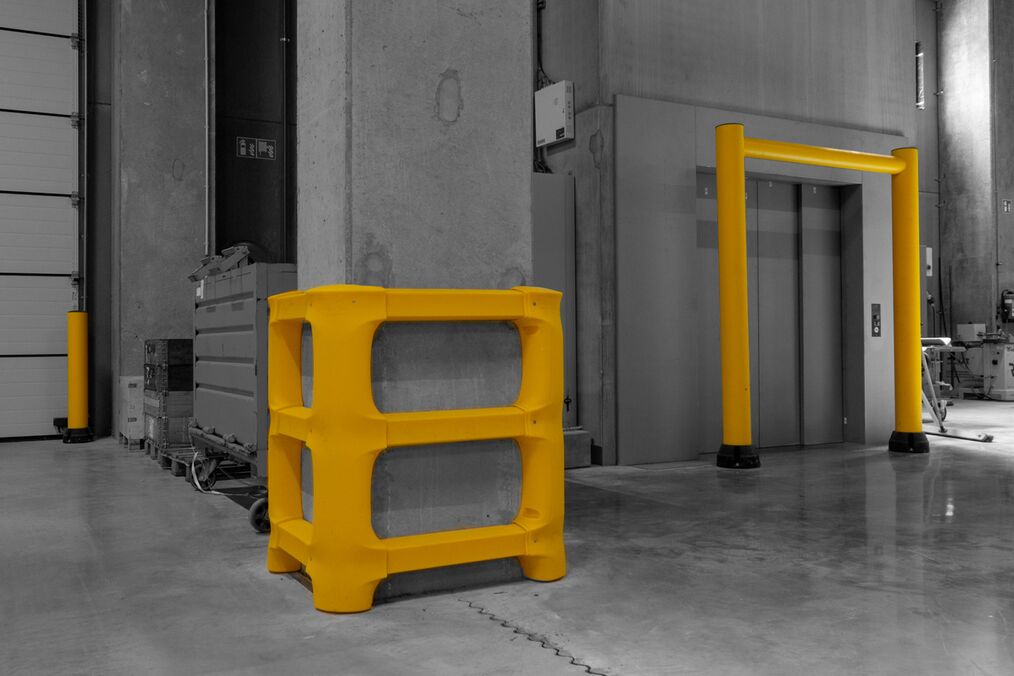
For architects of industrial buildings, this is a significant opportunity. By including safety in the design phase, you create a building that is naturally safer. Moreover, you create a building that is more efficient, sustainable, and future-proof.
Safety also determines a building's overall efficiency rating
In logistics and manufacturing environments, safety is inextricably linked to operational flows. The location of vehicle routes, pedestrian paths, loading and unloading zones, and storage structures has a direct impact on your building's day-to-day operations.
If you only consider safety solutions later in the process, you often have to make compromises. Additional barriers take up space, traffic flows need to be adjusted, and certain areas prove less efficient than expected.
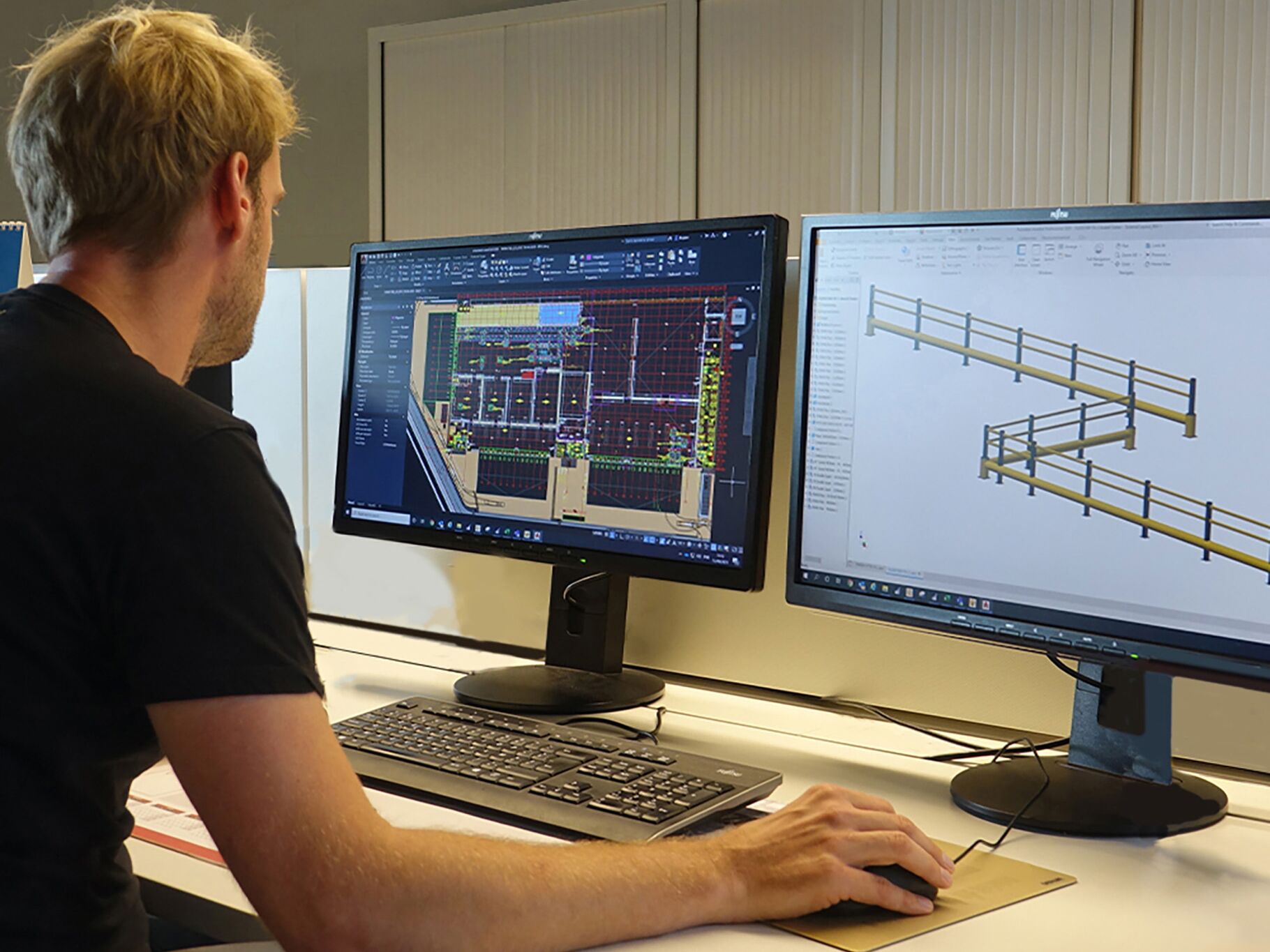
By integrating safety from the start of the design phase, you, as an architect, can optimize circulation flows without having to make corrections afterward. This results in a more logical layout, more efficient use of available space, and fewer conflicts between people, vehicles, and infrastructure.
Why retrofits are almost always more expensive
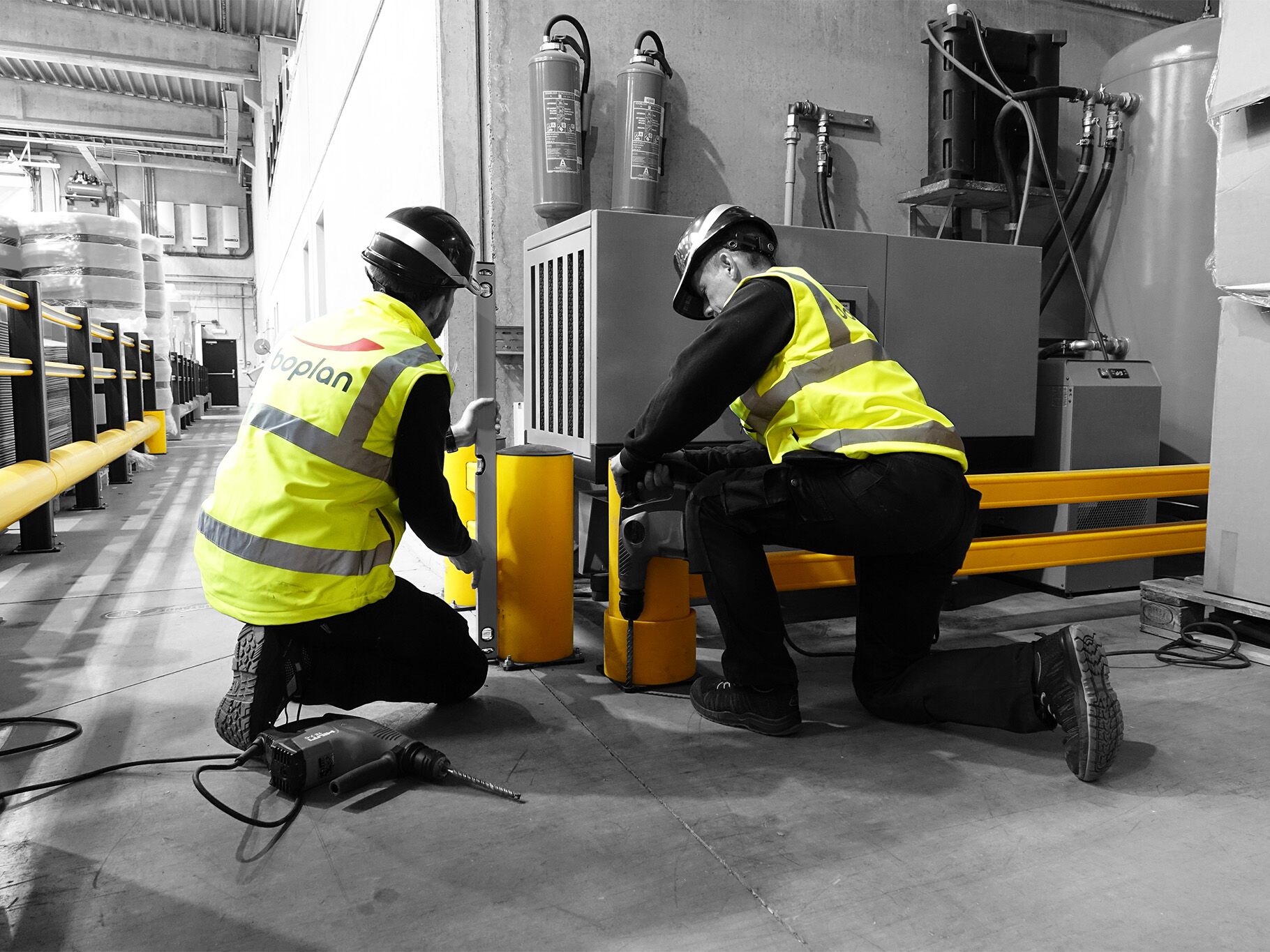
Adding safety infrastructure afterward often results in additional costs. For example, consider additional anchoring fixtures, floor modifications, and redesigning circulation routes once operational risks become visible.
Retrofit projects also normally disrupt operations. This is because new safety products have to be integrated into existing environments where manufacturing or logistics work is already in full swing.
When safety features are included in the design from the outset, they can be integrated into the building structure much more easily. This not only reduces installation costs, it also lowers the need for future modifications and avoids production downtimes.
For building owners, safety is therefore not an additional expense, it is a way to better control the building’s total life-cycle cost.
Why protecting infrastructure extends a building's service life
In industrial environments, buildings are exposed to impacts from forklifts, pallet trucks, and other vehicles on a daily basis. Without suitable protection, these impacts can eventually damage gates, racks, columns, and technical systems.
An integrated safety approach helps to limit this structural damage. This reduces maintenance costs, prevents downtimes, and extends the service life of your infrastructure.
Safety is also becoming increasingly important from the perspective of sustainability. A building that suffers less damage and remains operational for longer requires fewer repairs, reduces the need to replace equipment, and consumes less material over the long term.
Why safety and architecture go hand in hand
Too often, safety solutions are still just seen as functional improvements that are only added at the end of a project. In reality, safety solutions create holistic, professional industrial environments.
When safety solutions are included in the design phase, the result is greater visual uniformity. The use of color, choice of materials, and positioning of equipment are aligned with the architectural identity of the building.
This creates an industrial environment where safety does not feel like a disruption, but a logical part of the overall concept.
A good example is Quooker’s logistics center. Here, Boplan installed safety products in Quooker’s official color, a striking red.
Frequently asked questions (FAQ)
When safety is integrated early in the design process, it is much easier to organize circulation routes, storage areas, and traffic flows. This avoids costly modifications later and increases your safety and operational efficiency.
Architects can design buildings that are more flexible, more sustainable, and better prepared for future expansions or automation. It also creates greater visual and functional coherence within a project.
Retrofit projects often result in additional costs, operational disruptions, and limited logistical flows. It is also more difficult to integrate safety structures into an existing building optimally.
Impact protection prevents damage to buildings and equipment, extending the service life of infrastructure and reducing the need for maintenance or replacement. This reduces material consumption as well as operating costs.
In modern warehouses and manufacturing environments, safety is closely linked to efficiency, automation, and traffic management. A well-integrated safety infrastructure means safe and efficient operations.