10 uses of handrails in industrial and logistics environments
In industrial and logistics environments, efficiency is critical. Goods must move quickly, employees must work efficiently and processes cannot come to a standstill. Yet this dynamic also creates risks.
A forklift taking a corner too quickly, an employee entering a hazardous zone, or a loading bay where someone crosses a forklift route. These are situations every safety manager recognises.
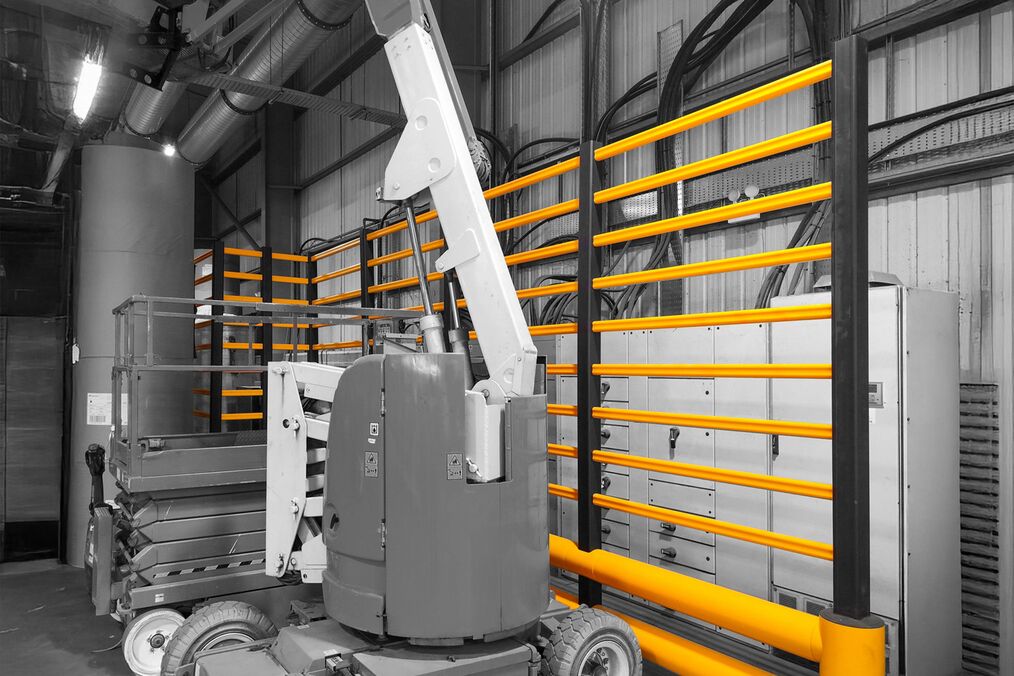
Handrails play a crucial role in these environments. They not only clearly demarcate different zones but also guide movement, prevent hazardous situations and make workplaces structurally safer.
Below are 10 handrail applications that frequently occur in practice.
Use 2
Guiding walkways and preventing desire lines
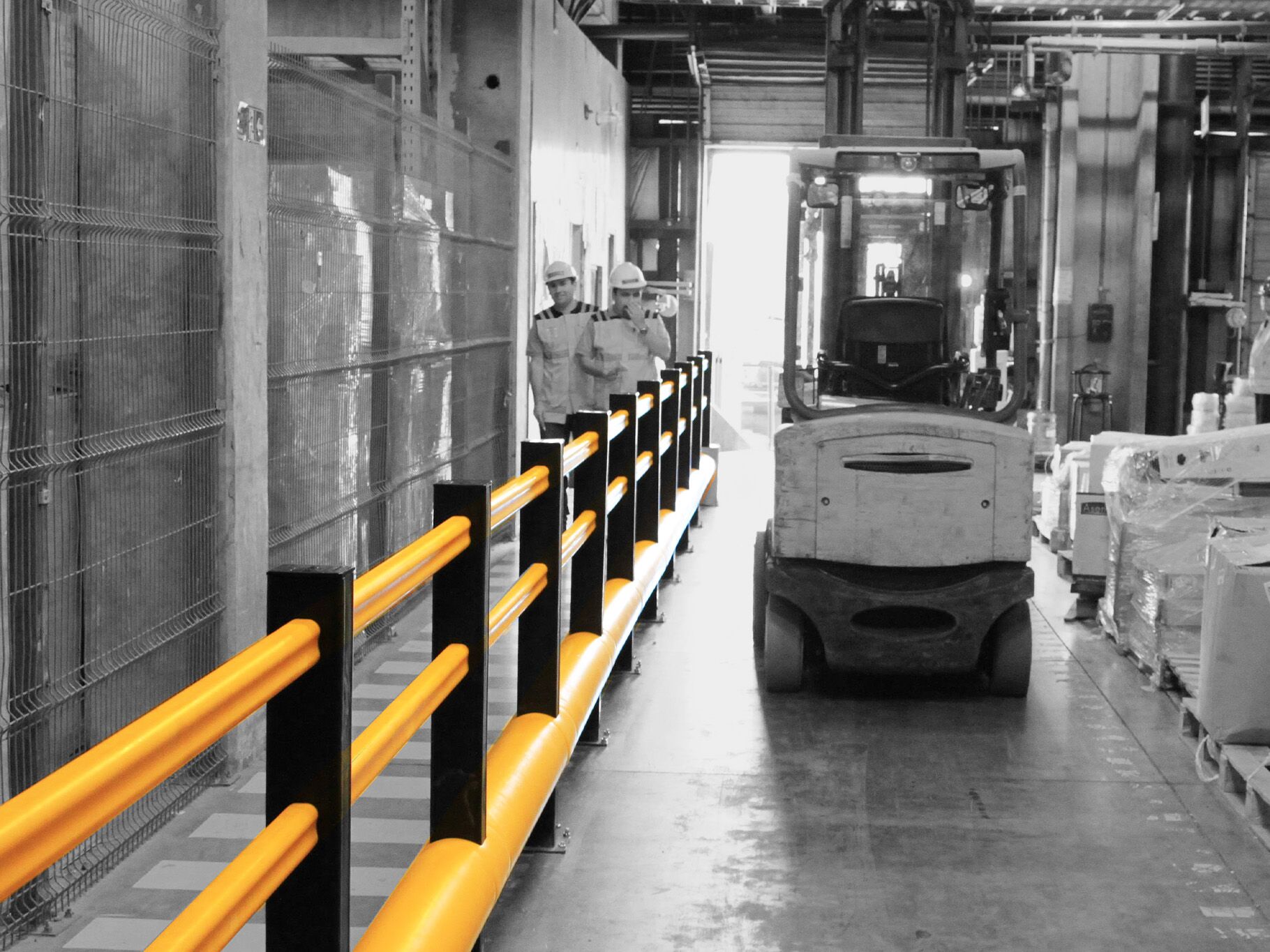
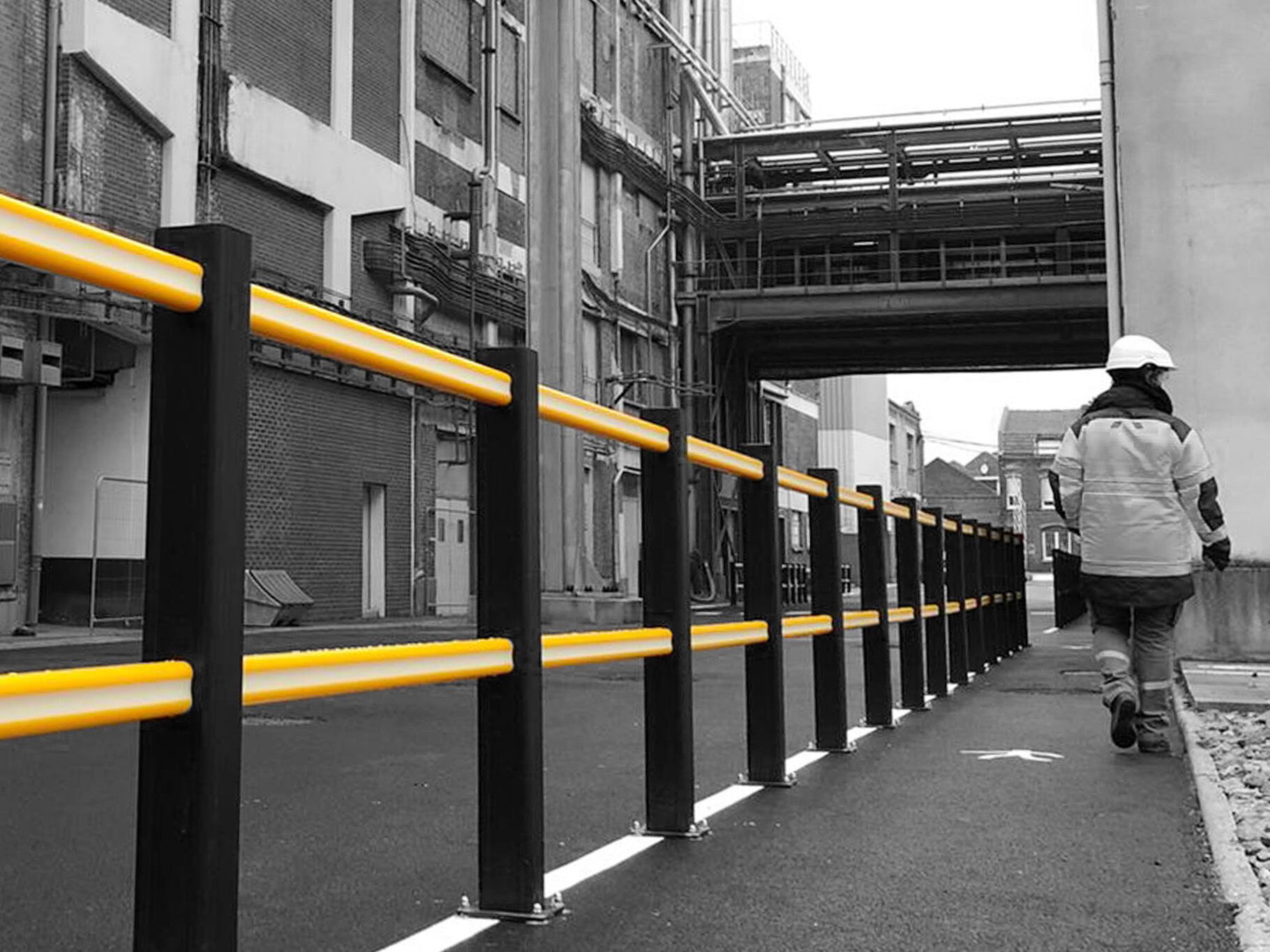
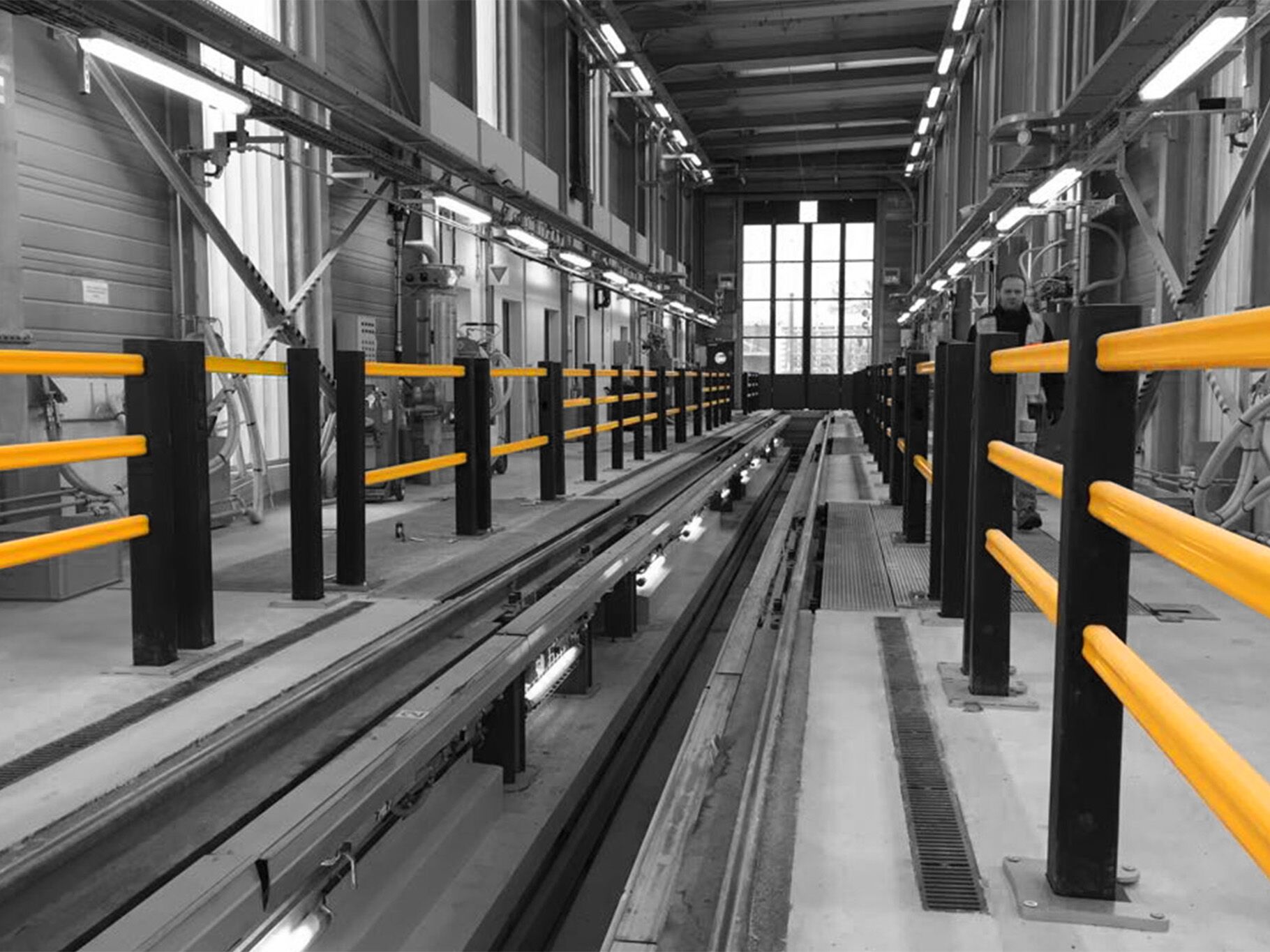
Employees naturally choose the shortest route between two points. In working environments, that route may cut through a picking zone, run alongside a rack or pass dangerously close to a forklift lane. What starts as a practical shortcut quickly becomes a habit. And habits are difficult to change.
The problem? These informal routes create unsafe situations. For forklift drivers, traffic becomes less predictable, while pedestrians enter risk zones without realising it.
Handrails allow you to deliberately guide walkways through physical separation. They clearly indicate the safe route for everyone. Instead of relying solely on floor markings or signage, you install a physical barrier that prevents shortcuts. This helps eliminate desire lines and creates a structured, predictable and, above all, safer workplace.
Use 4
Protection around loading bays
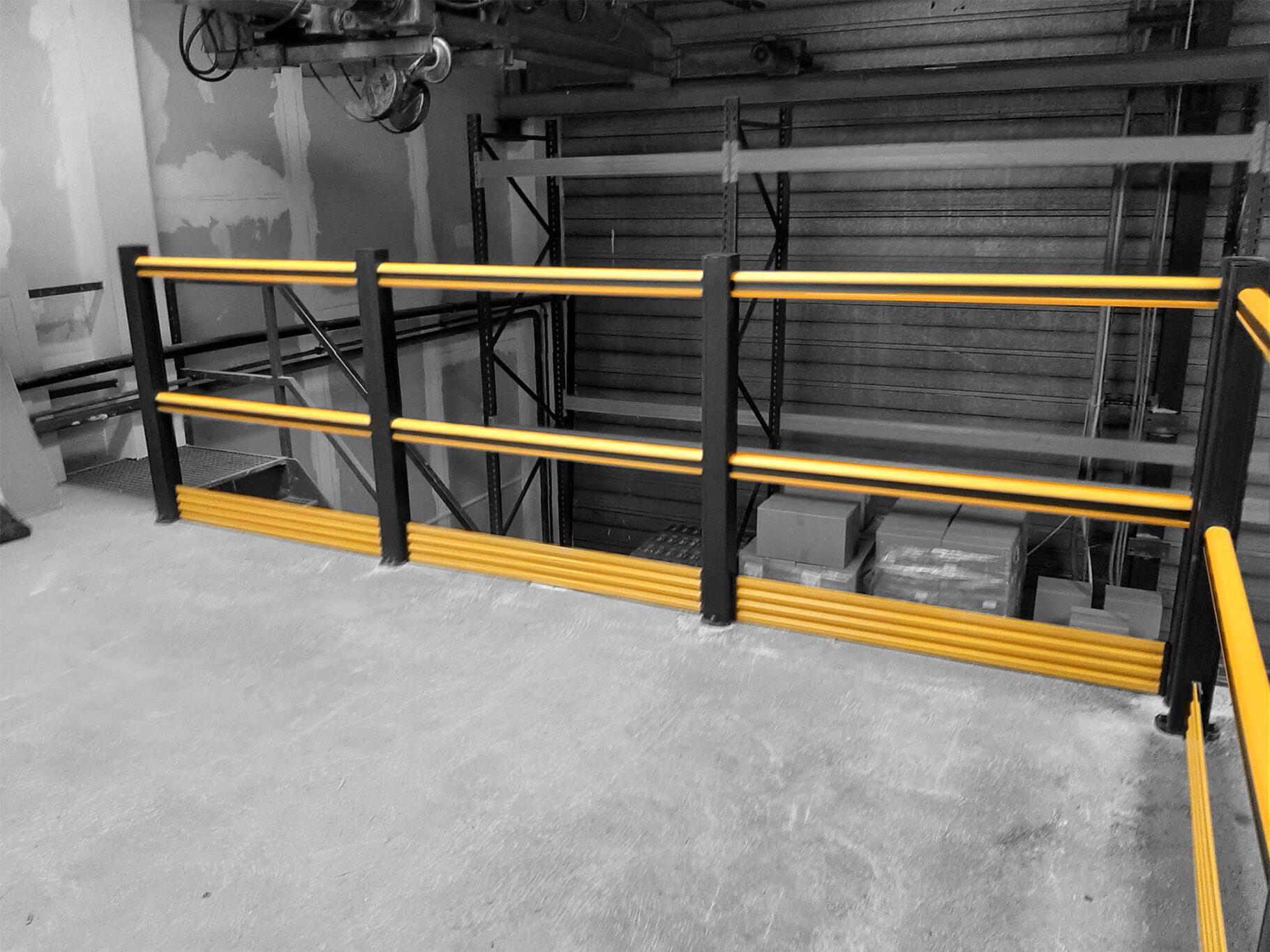
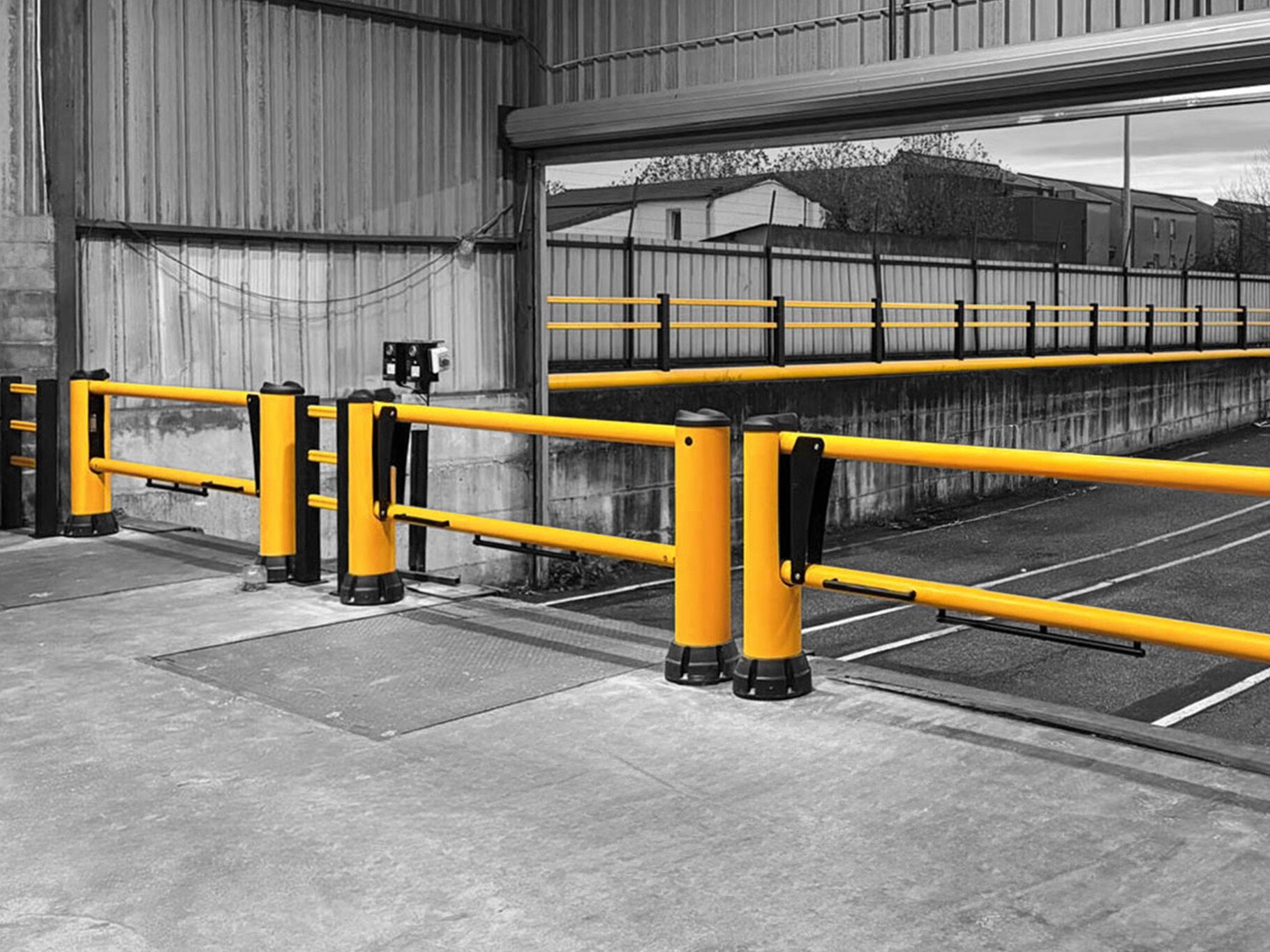
Loading bays are busy hubs where lorries, pallet trucks and employees come together. This is exactly where incidents often occur: someone standing too close to the edge, an unexpected vehicle movement or a temporary opening left unprotected.
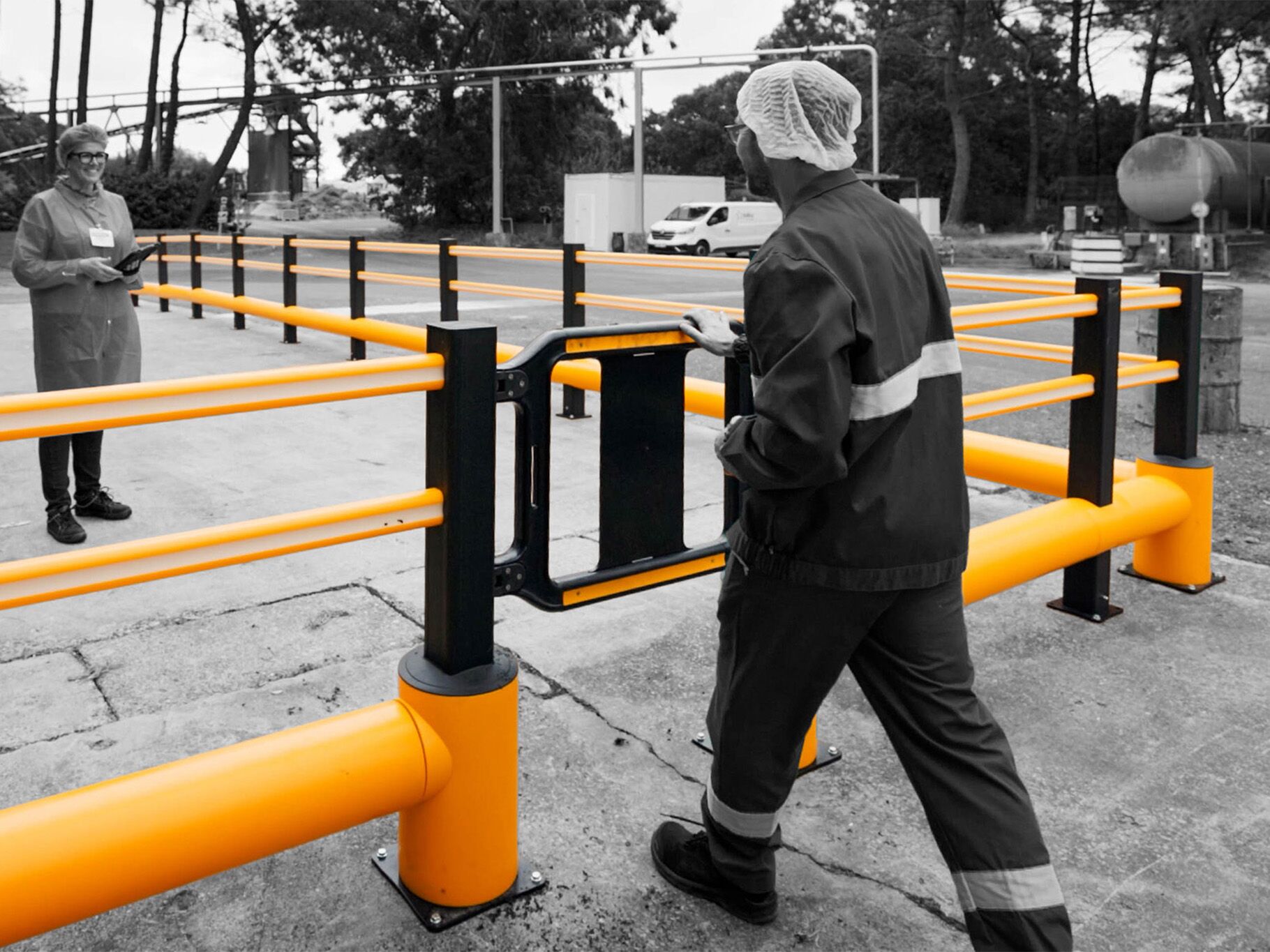
A handrail along the loading zone creates a clear barrier between the safe working area and the fall hazard at the edge. This is particularly important where several loading zones operate side by side, as it prevents employees from unintentionally entering a risk zone.
By strategically placing safety gates at access points, the area remains both flexible and safe: open when needed, closed when necessary,
Want to know more?
Use 6
Protecting technical installations and infrastructure
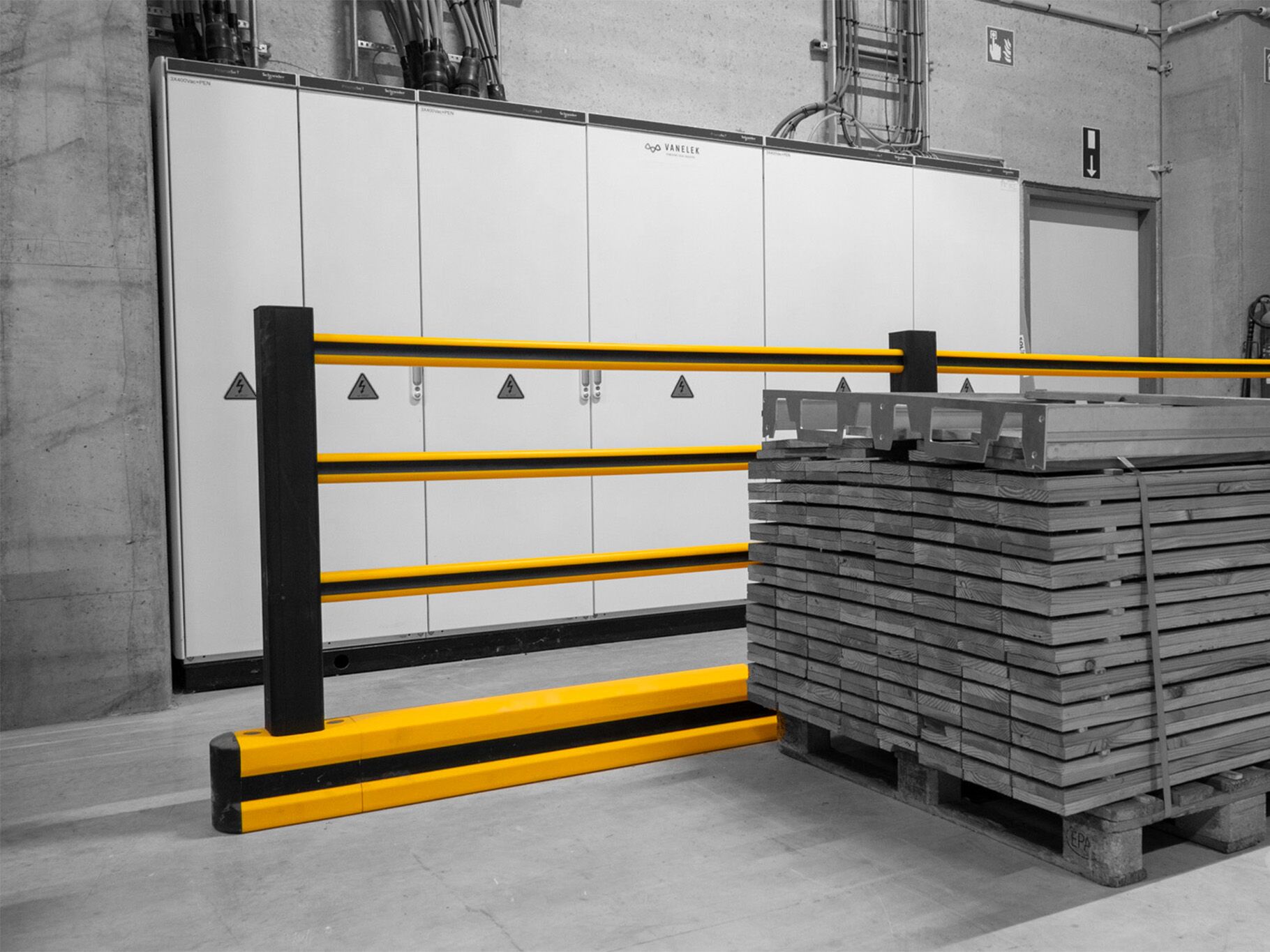
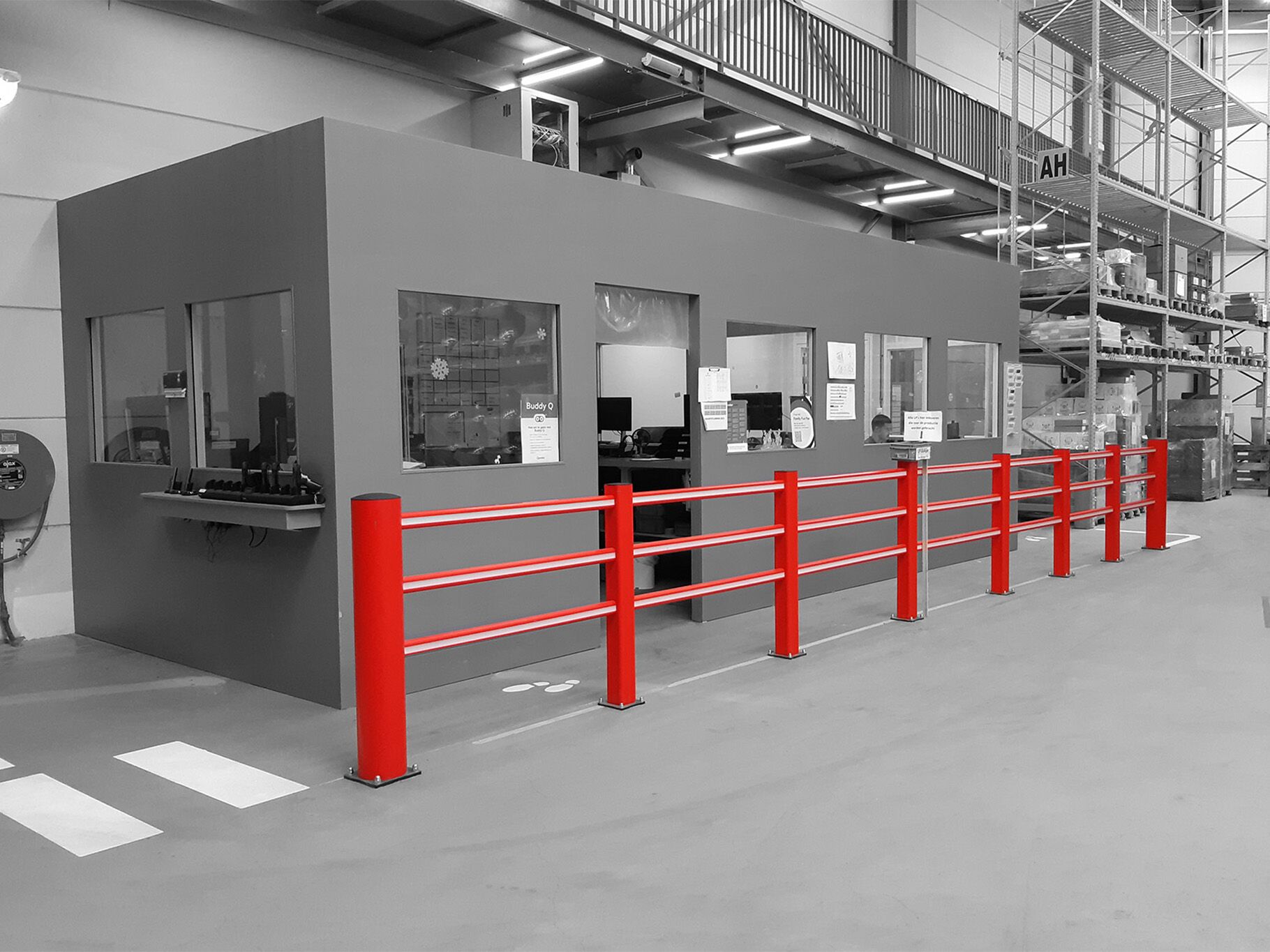
Technical rooms and installations such as electrical panels, compressed air lines or server cabinets are essential for operational continuity. Yet they are sometimes located in areas where vehicles pass or pallets are temporarily placed.
Even a minor collision can cause damage, leading to downtime and additional costs.
Safety barriers and handrails protect this vulnerable infrastructure. They prevent impact damage and ensure that these areas are not unintentionally used for storage.
Use 8
Ensuring safe evacuation routes
In emergency situations, every second counts. Yet in practice, evacuation routes can sometimes become blocked by temporarily stored goods, misplaced pallets or walkways that are not clearly marked. On large sites in particular, escape routes must remain clear and easy to recognise at all times.
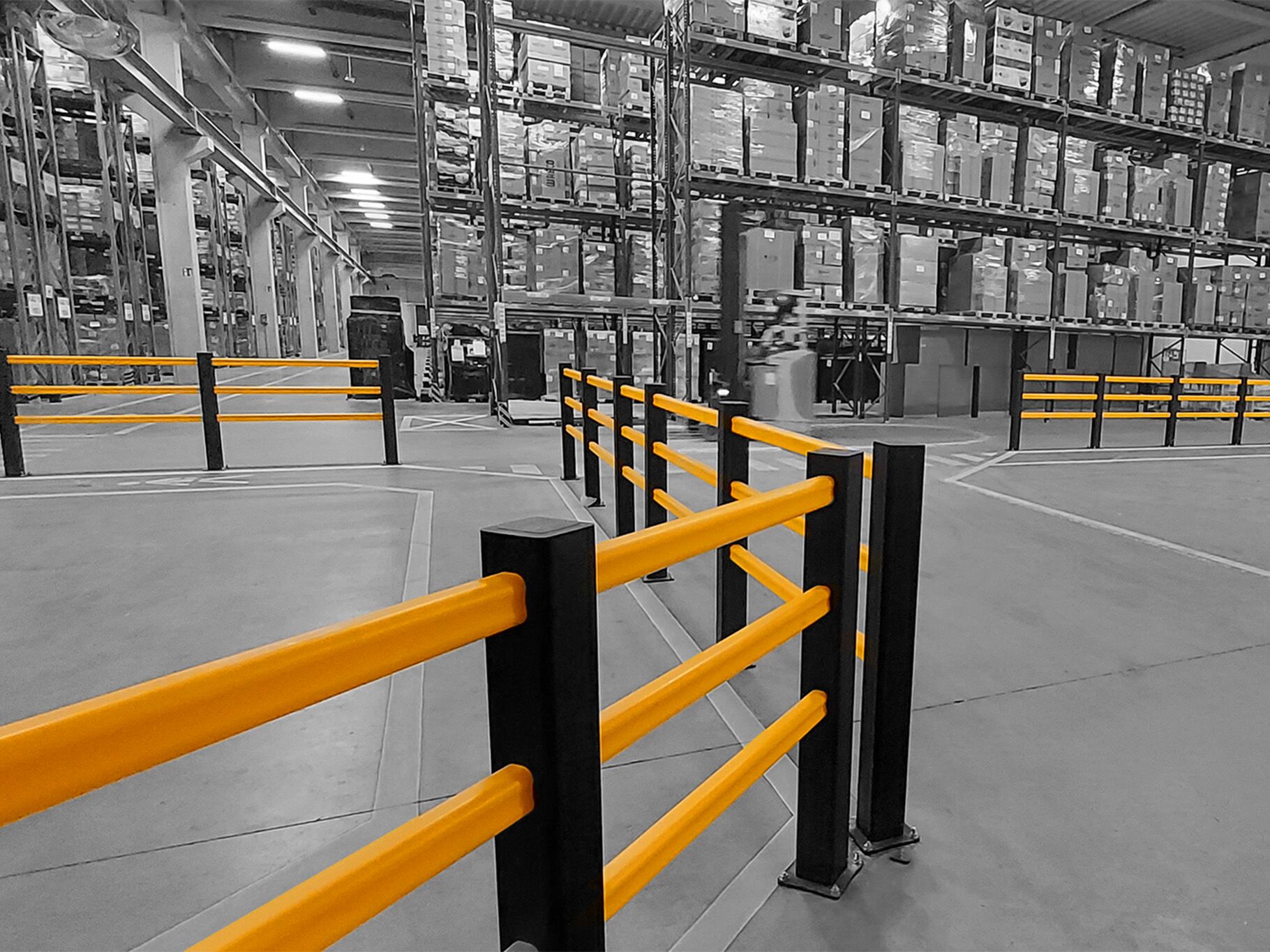
Handrails help create a fixed structure on the work floor. They ensure that emergency routes are not overtaken by day-to-day activities and help employees instinctively follow the correct path.
Glow-in-the-dark lines on the rails provide an additional safety aid. These luminous lines absorb light during the day and gradually release it at night or during a power outage. This keeps walkways visible even in low-light conditions. Quooker, the Dutch manufacturer of boiling-water taps, chose handrails with glow-in-the-dark strips to improve visibility.
Use 10
Modular safety during reorganisation or growth
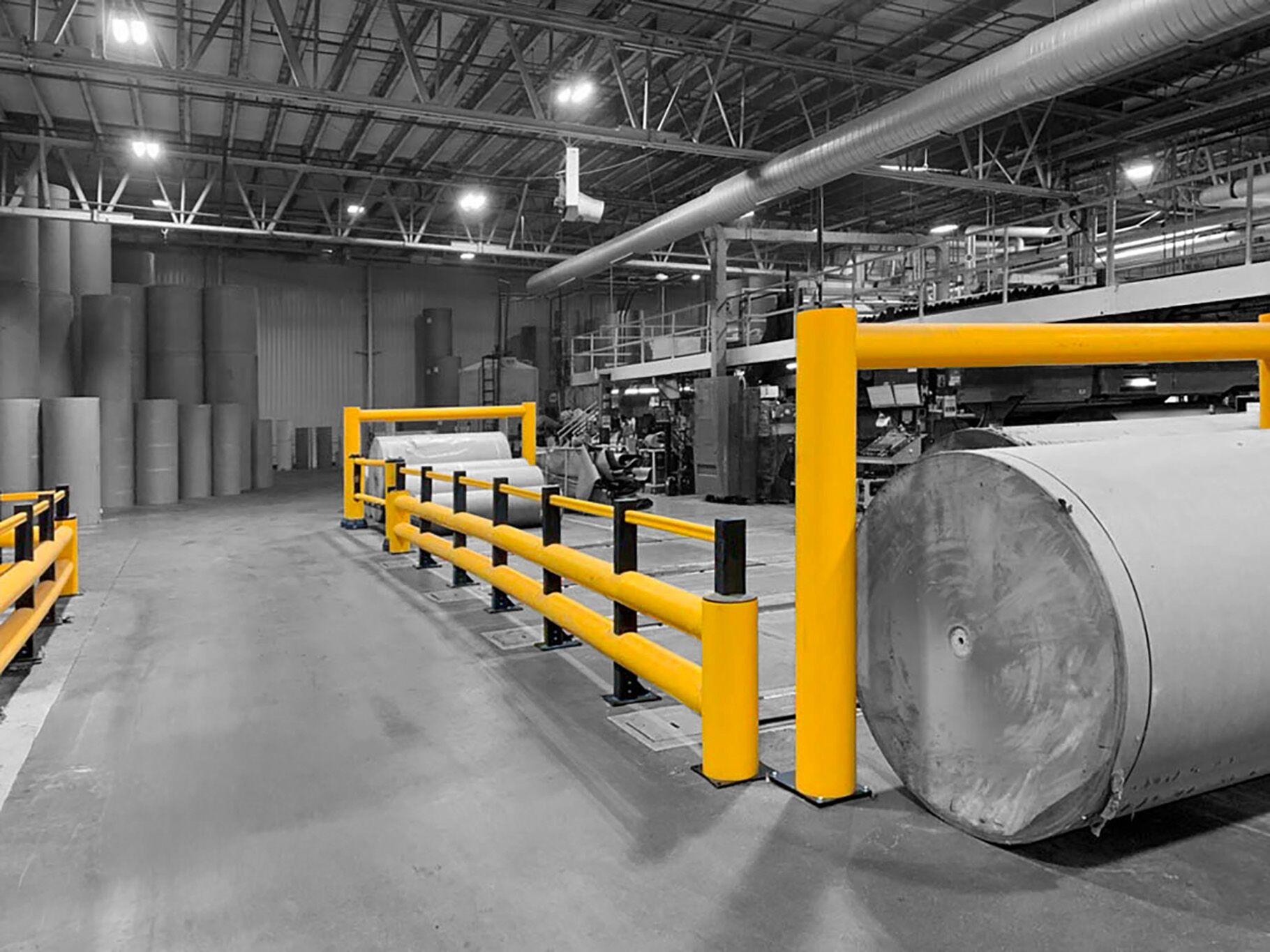
Warehouses constantly evolve. New product lines, additional storage or changes to walkways regularly reshape the work floor. As operations grow and change, safety must evolve with them.
Temporary solutions such as tape or floor markings may offer a short-term fix in environments with impact risks, but they are not a sustainable solution.
Modular handrails provide the necessary flexibility. They grow with the site, making it easy to create additional safe zones or extend existing ones.
Handrails as part of a total safety concept
In industrial environments, handrails are rarely used in isolation. They form part of a broader safety strategy in which safety barriers, TB PLUS barriers and safety gates also play a role.
By combining these solutions intelligently, you create a work floor that is not only safer but also more efficient, better organised and prepared for future growth.
Ready to take safety in your industrial or logistics environment to the next level? Discover the full potential of handrails.