Lean warehousing: Why an efficient warehouse is also a safe warehouse
What is lean warehousing and why is it important?
Lean warehousing is about optimizing warehouse processes by eliminating waste and creating maximum value for the customer. Less movement, shorter lead times, and more efficient use of resources are key to this approach.
In practice, the focus is usually on speed and productivity. Safety is still too often seen as a separate priority — or worse: as a potential obstacle to efficiency.
That view is wrong.
In many warehouses, efficiency and safety are still treated as two separate conversations. In reality, however, inefficient processes often create the greatest safety hazards.
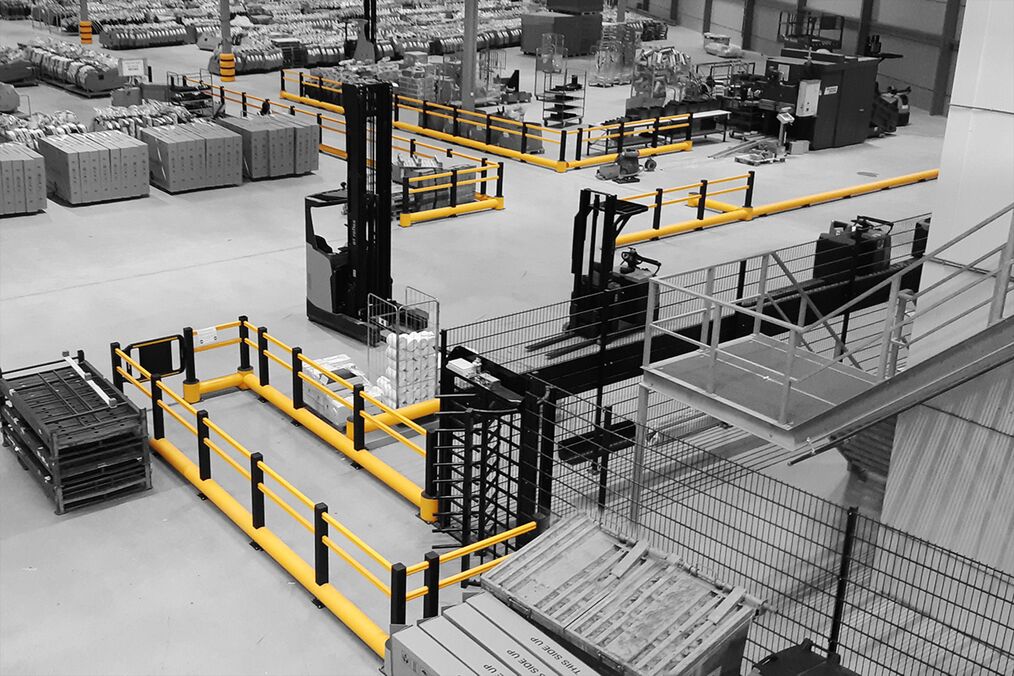
Lean warehousing in practice
Many warehouses face the same challenges. Forklifts and pedestrians share the same spaces. Goods are often moved unnecessarily. Workstations become overcrowded or disorganized. Processes differ from one employee or shift to another. Situations like these not only result in wasted time and mistakes, they also increase the risk of accidents and damage.
It is clear that inefficiency and unsafe conditions generally go hand in hand.
The link between lean warehousing and safety
Lean warehousing is based on stability, predictability, and flow. Those same elements are also the basis for a safe work environment.
Less movement, less risk
Every time that goods or vehicles are moved from one location to another, the risk of collision and damage increases. By optimizing traffic flows and eliminating unnecessary movement, you automatically reduce risk on your work floor.
Clear processes prevent mistakes
Standardized work methods ensure that employees know what to do and how to do it safely. Less variation means fewer mistakes and fewer dangerous situations.
Organization and structure increase safety
A tidy, well-organized work floor makes hazards visible and manageable. Obstacles, clutter, and unclear traffic zones disappear, enabling employees to work more safely and efficiently.
Clearly marked and delineated areas combined with separate traffic flows ensure that everyone intuitively understands how the warehouse is organized. This prevents misunderstandings and dangerous interactions.
Want to learn more? Read our white paper on warehouse safety solutions.
Concrete examples of lean warehousing with result
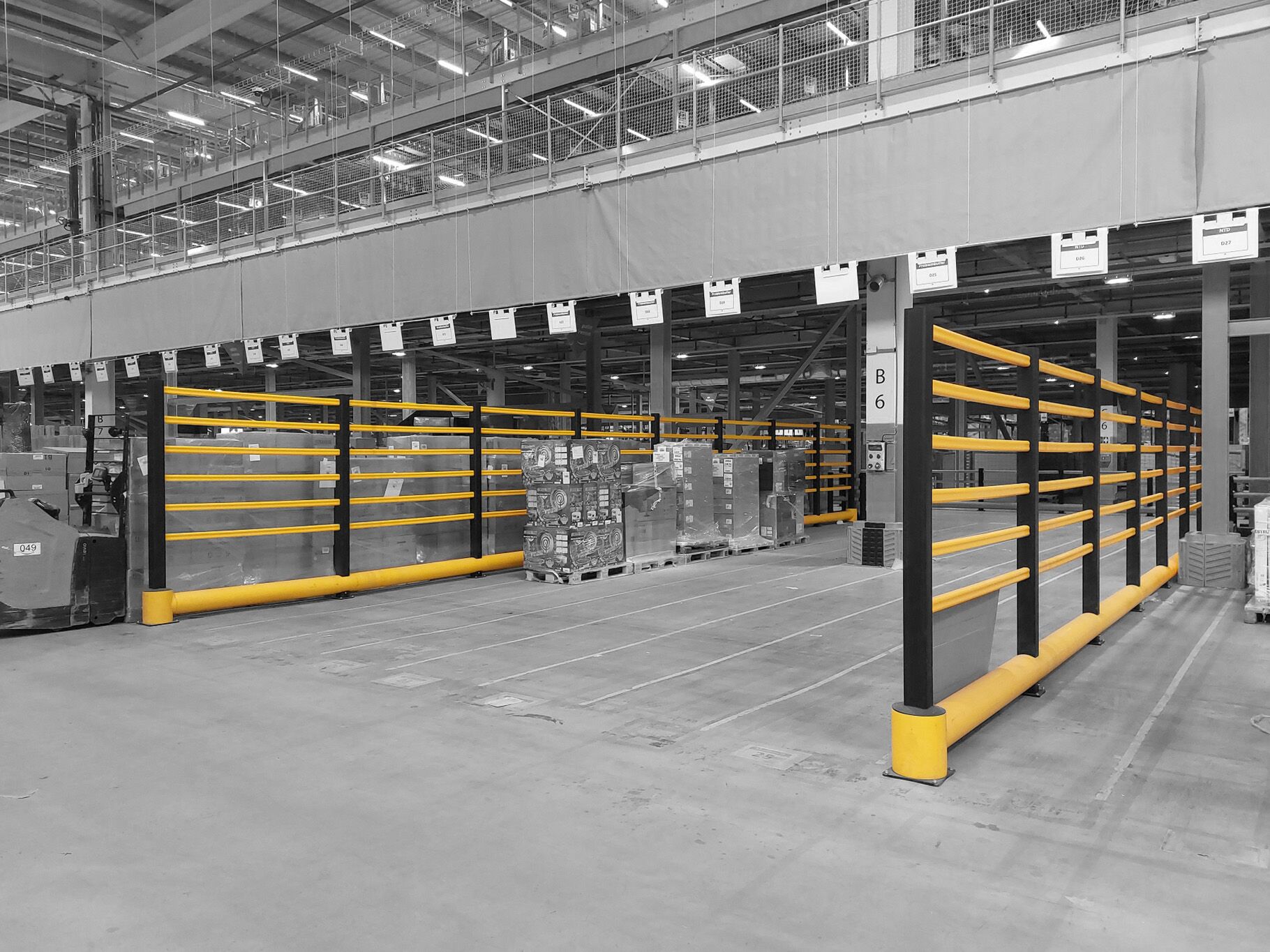
Separate traffic flows
By clearly separating forklift routes and pedestrian zones, you reduce the risk of accidents while also improving the flow. Vehicles do not have to slow down as much, and picking processes run more smoothly.
Layout optimization
By placing products closer to the point of use, you reduce the need to transport goods internally. Shorter distances mean less risk of damage and shorter lead times.
How 5S brings structure to the warehouse
A structured workplace means less time searching for tools, fewer mistakes, and less physical strain. At the same time, you are also reducing the risk of falls and accidents.
Safety as a catalyst for efficiency
In a lean warehouse, safety is an absolute requirement for reliable processes. Accidents result in downtime, damaged infrastructure and goods, lost productivity, and additional costs. By managing risks, you create an environment where processes run predictably and reliably. This is essential for any kind of optimization.
The role of physical protection in lean warehousing
Efficient flows require clear organization on the work floor. Physical separation and protection play an important role in this.
Examples include separating traffic flows, protecting critical infrastructure, and guiding vehicles along safe routes. These solutions not only increase safety, they also reinforce the logic and discipline behind your processes. They do so by making desired traffic flows visible and enforceable.
Conclusion
Lean warehousing and safety are not separate objectives. They reinforce one another.
A warehouse without clear organization and traffic flows will never be truly efficient. And an inefficient warehouse is rarely safe. When you adopt lean methods, you automatically invest in safety — and vice versa.
Need advice? Invite one of our safety experts to your warehouse for an insightful conversation.
Lean warehousing FAQs
Lean warehousing is a method for optimizing warehouse processes by eliminating waste and focusing on efficient, standardized workflows.
The main benefits are:
- Shorter lead times
- Lower operational costs
- Fewer mistakes and less damage
- Better use of space and resources
- Higher productivity
Lean warehousing reduces risk:
- Less movement of goods
- Clear work processes
- Organized workplaces
- Visual and physical zone separation
All of this minimizes hazards on the work floor.
Want to learn more? Read our white paper on warehouse safety solutions.
No. Although efficiency is indeed a priority, applying lean methods correctly improves stability, predictability, and safety in the warehouse.
Start by evaluating your current processes and identifying waste and risk areas. Then implement improvements step by step, e.g., layout optimization, standardization, and visual communication.
Need advice? Invite one of our safety experts to your warehouse for an insightful conversation.