5 common mistakes in warehouse floor marking tape (and how to avoid them)
In warehouses and production environments, people, forklifts and pallet trucks are constantly moving through the same space. Without a clear structure, this quickly leads to unsafe situations. Floor marking tape makes traffic flows visible, clearly defines work areas and helps employees move safely around the workplace.
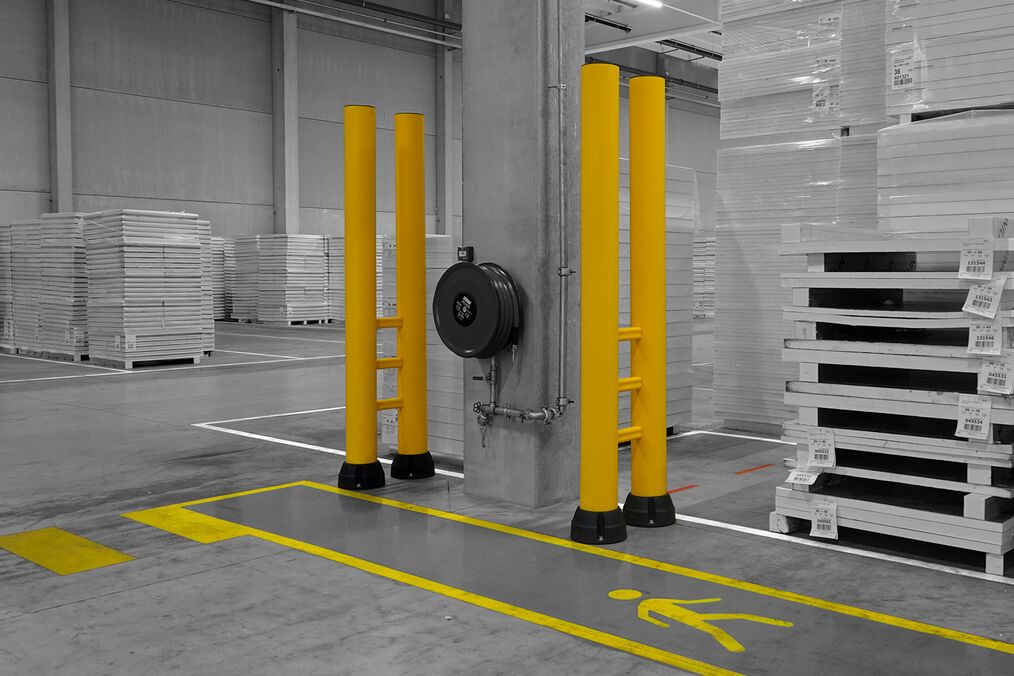
Yet many companies’ approach to line marking is more practical than strategic. They apply markings without any clear logic, choose colours without consistent meanings or allow lines to fade over time due to wear. As a result, floor marking tape loses much of its value.
If you want to create a safe and efficient working environment, it is essential to take a critical look at how line marking is used. Here are five mistakes we see regularly in warehouses and production environments.
Insufficient separation between pedestrian routes and vehicle traffic
Mistake 1
In many warehouses, pedestrians and internal transport share the same space. Floor marking tape is present, but the separation between the two traffic flows is often unclear.
For example, walkways are positioned too close to forklift routes, or intersections are not sufficiently visible. In such situations, employees constantly have to assess where it is safe to move. This increases the risk of unsafe situations.
In many warehouses, such situations arise where pedestrian routes and forklift traffic intersect. For example, in aisles between racking or in order picking areas. Employees must regularly cross vehicle routes where forklifts are transporting pallets.
Clearly marked crossings and well-defined pedestrian zones show where people are expected to be right away. This makes for a safer, more predictable workplace.
The psychology of floor marking tape
Floor marking tape is effective not only because it is visible. It also influences how people interpret their environment.
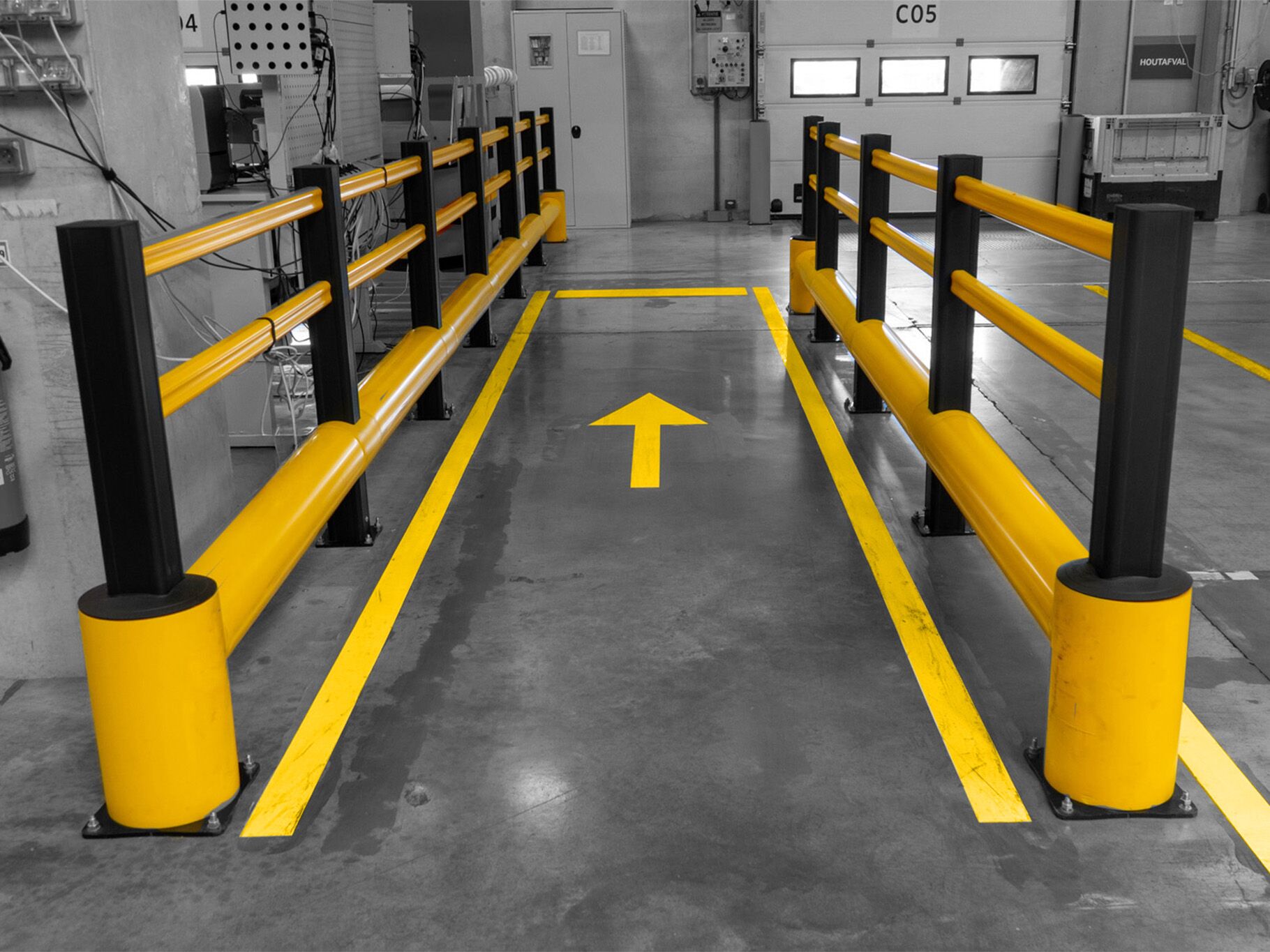
Employees often follow a clearly marked route automatically. The same applies to clearly defined zones. These subconsciously indicate where activities should or should not take place. Visual signals guide behaviour without the need for constant instructions.
A simple example is a walkway between racking. When that path is clearly marked, employees will follow it automatically. Without floor marking tape, people often choose the most direct path, even if this crosses a forklift route.
By visually indicating routes, floor marking tape subtly but effectively influences behaviour in the workplace.
Using the wrong colours
Mistake 2
Colours play an important role in visual communication on the workplace. They help employees recognise information quickly, even in a busy industrial environment.
Yet companies often use colours without any clear logic. Different zones are assigned the same colour, or the same colour is used with different meanings in different locations. The marking remains visible, but its function becomes less clear.
Consistent colour coding helps employees understand what markings indicate at a glance.
What do floor marking tape colours mean?
Although colour codes may vary from company to company, many industrial environments follow similar guidelines.
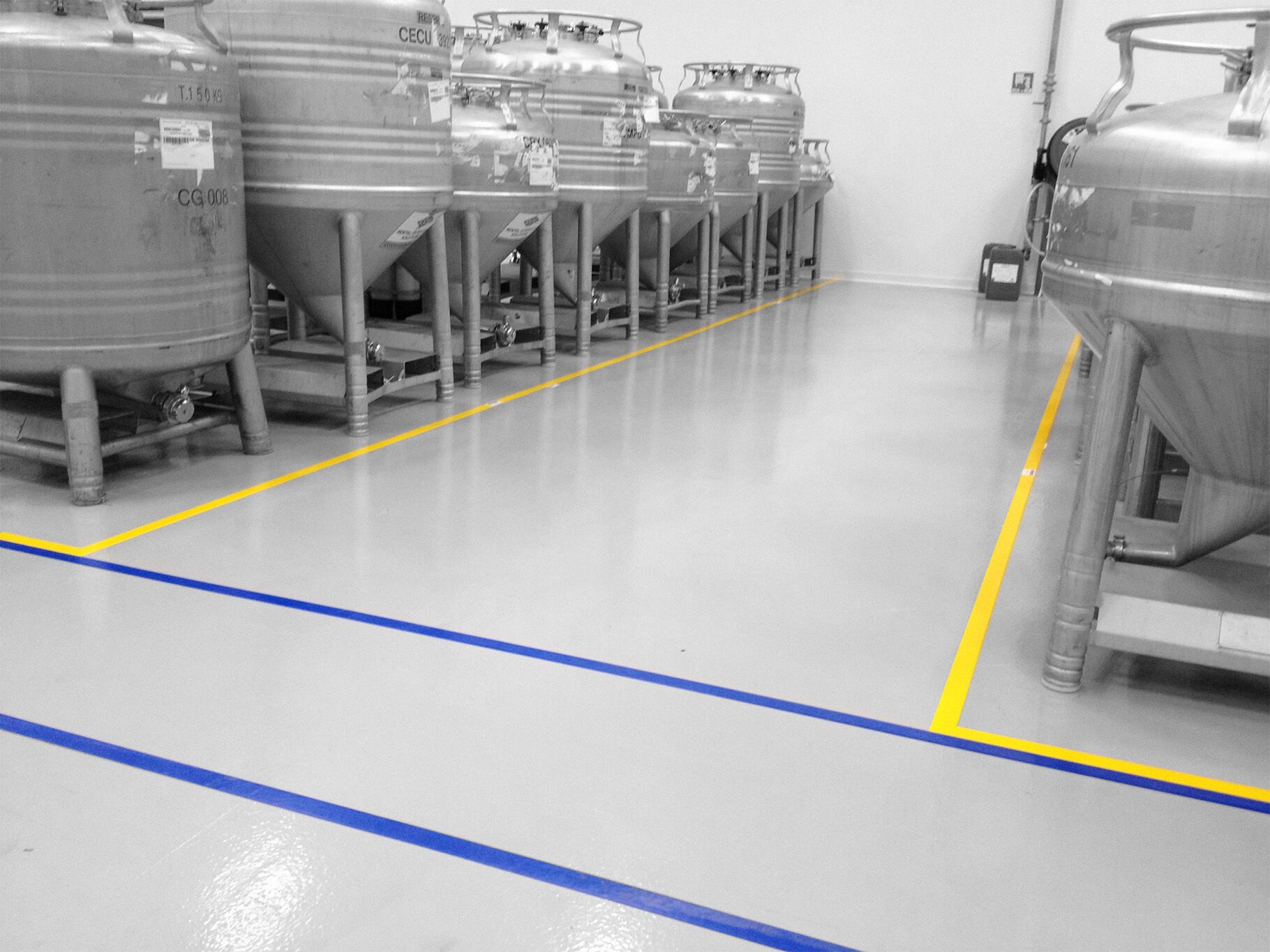
Yellow often marks general traffic routes and safety zones. Red usually indicates danger or areas that must be kept clear. Green markings often indicate safe zones, such as emergency exits or first aid points. Blue markings are regularly used for information zones or specific work areas.
The most important thing is that companies apply colours consistently. When employees recognise the meaning of a colour, they respond faster and more safely.
However, colours and clearly defined zones are only part of the story. Floor marking tape must also align with how people and vehicles move through the warehouse. If the underlying traffic structure is not logical, even clearly visible floor marking tape can inspire confusion.
Applying floor marking tape without a logical traffic flow
Mistake 3
Floor marking tape only works when it aligns with how people and vehicles move through a warehouse.
When companies apply markings without a clear traffic plan, illogical situations quickly arise. Routes suddenly end, intersections are unclear, or storage areas block vehicle routes. Instead of creating structure, floor marking tape can actually cause additional confusion.
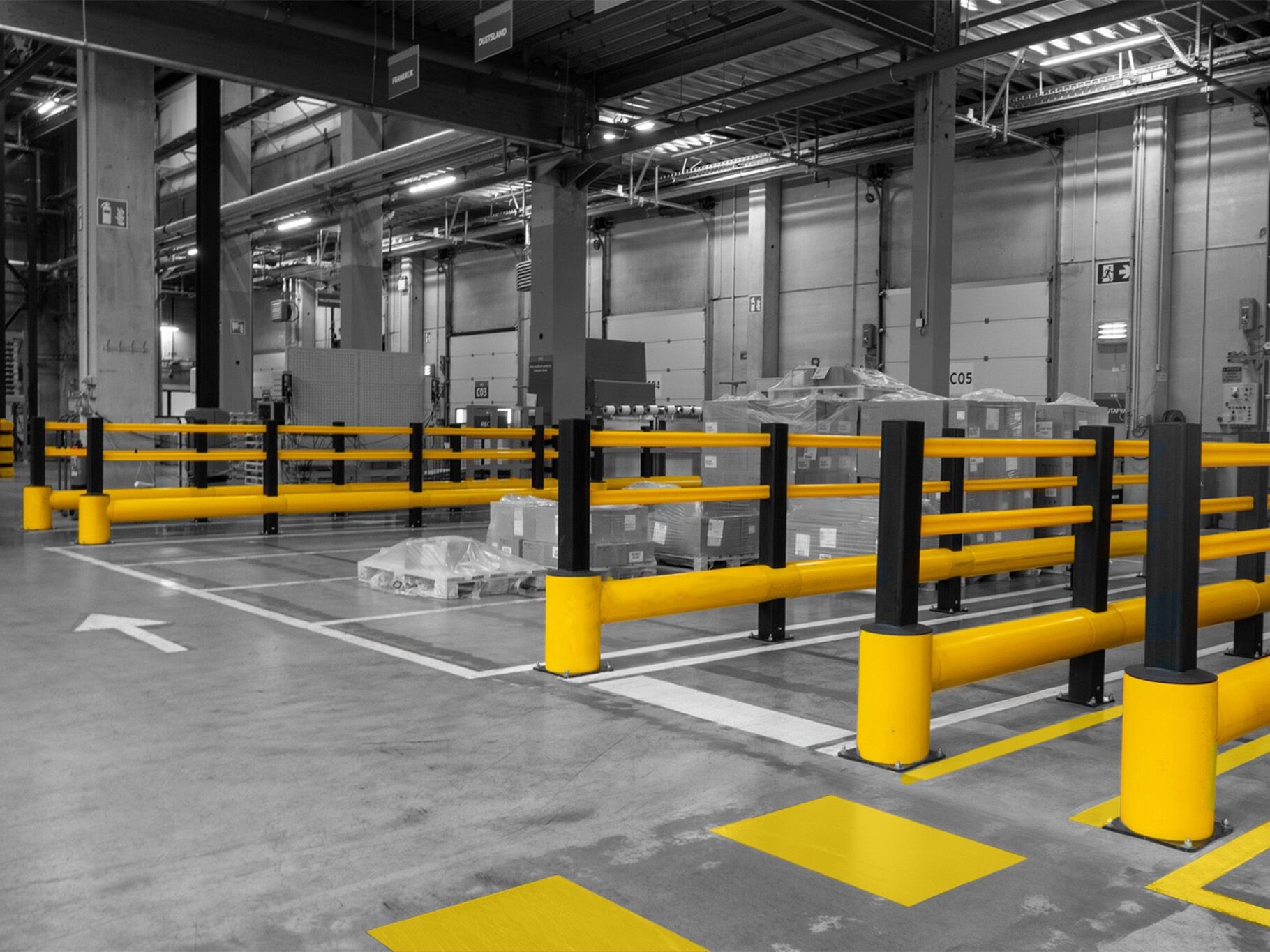
A classic example can be seen around loading bays. Forklift trucks continuously transport pallets to and from trucks while employees move through the same areas. When vehicle routes, waiting areas and pedestrian zones are not clearly marked, chaos is quick to arise.
Clearly defined vehicle routes and separate zones for loading, unloading and pedestrian traffic immediately create a much clearer traffic situation.
How do you design a safe traffic flow?
A safe traffic flow starts with analysing daily movements on the shop floor. Which routes do forklifts follow? Where do pedestrians cross these routes? Where do most conflicts occur between different traffic flows?
By mapping these movements first, you can define clear vehicle routes, pedestrian zones and crossing points. Floor marking tape then makes this structure visible on the shop floor.
When traffic flows are logically structured, a warehouse often becomes not just safer, but more efficient too.
Want to know more? Read our blog:
Markings that wear out too quickly
Mistake 4
Warehouse floors are subject to heavy loads. Forklift traffic, pallet trucks and intensive cleaning can cause floor marking tape to wear out quickly when the wrong materials are used.
When markings fade or become damaged, they lose their function. Lines become less easily visible to employees, and the workplace structure is less clear.
In busy warehouses, forklifts often travel the same routes hundreds of times a day. As a result, floor marking tape wears faster in high-impact areas such as intersections, in turns and around racking.
When markings at these critical points fade, the visual structure of the warehouse disappears. This reduces clarity precisely in the areas where it is most needed.
Tape vs. paint: which floor marking tape should you choose?
For floor marking tape, companies typically choose between two solutions: paint or floor marking tape. Both options have their own advantages.
Paint is often used for permanent markings and can withstand intensive use. Floor marking tape, on the other hand, is quicker to install and easier to adjust when the warehouse layout changes.
The right choice depends on several factors, such as traffic type, floor loading and the level of flexibility required. In dynamic environments, companies often choose solutions that are both durable and easy to adjust.
Not adapting floor marking tape when the shop floor changes
Mistake 5
Warehouses change constantly. Racking is relocated, processes change and new machines are installed.
Yet floor marking tape often remains unchanged for years. This leads to situations where old and new lines overlap or routes no longer match the current workflow.
By regularly evaluating floor marking tape, it remains aligned with how the shop floor is actually used.
Floor marking tape as the basis for a lean warehouse
Many companies see floor marking tape primarily as a safety measure, but it can also play an important role in warehouse organisation.
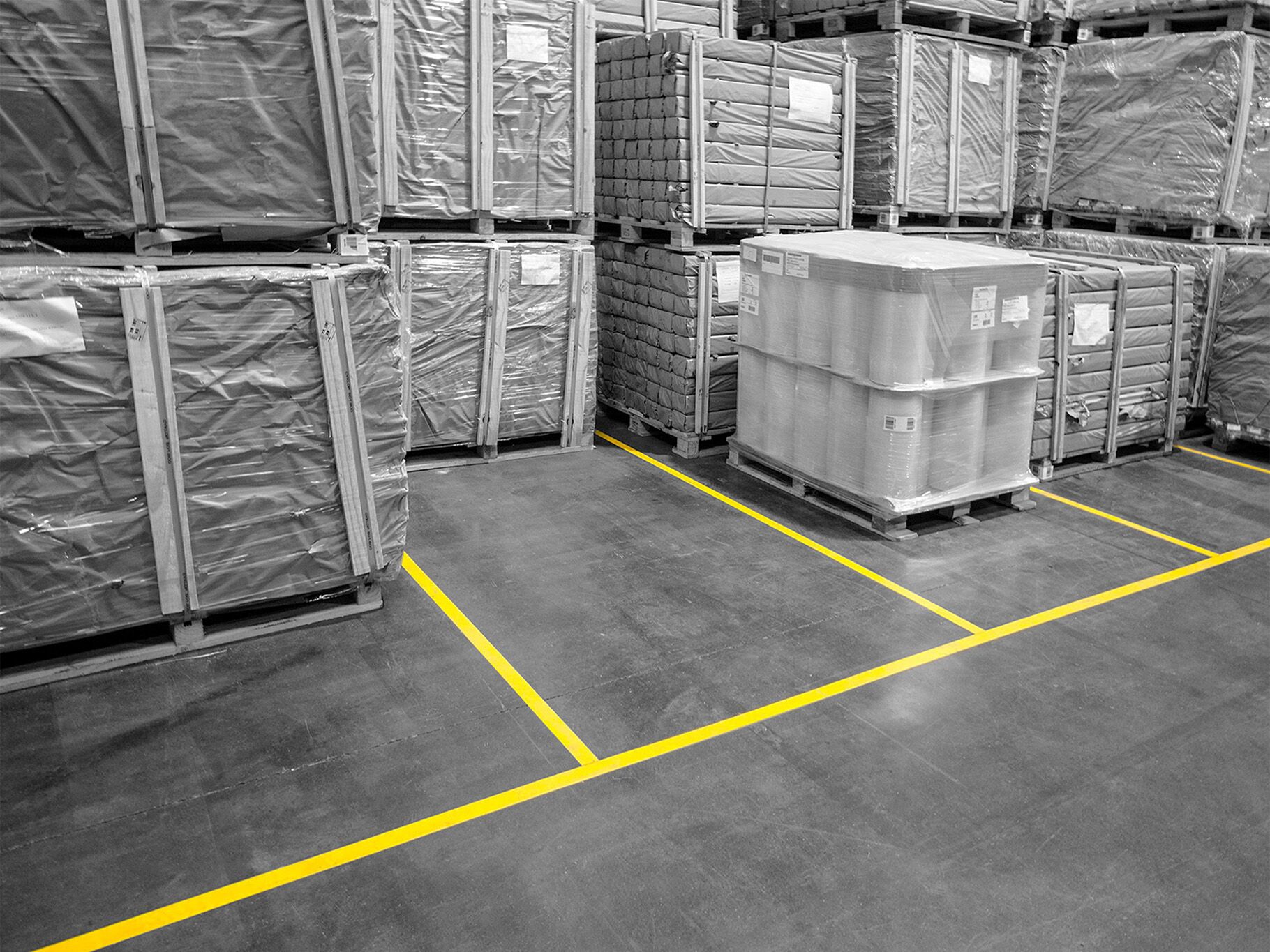
When storage areas are clearly marked, it becomes immediately obvious when pallets are not in their designated zones. Employees spot deviations more quickly and keep the shop floor better organised.
Within lean methodologies such as 5S, visual management plays an important role. When everything has a fixed place and zones are clearly defined, it becomes easier to maintain structure and organise processes more efficiently.
Floor marking tape therefore provides a practical foundation for a clear and efficient shop floor.
Conclusion
Properly applied floor marking tape is much more than just lines on the floor. It supports safe traffic flows, clearly defines work areas and helps organise industrial environments effectively.
Anyone walking through a well-organised warehouse will notice it immediately. Vehicle routes are clear, work areas are visibly defined and employees instinctively know where they are allowed to move. This level of clarity rarely happens by chance. It is usually the result of well-designed floor marking tape.
By avoiding common mistakes and regularly assessing markings, workspaces are kept safe, organised and efficient.
Floor marking tape does not stop a forklift
Floor marking tape alone is not enough to fully reduce risks. Especially in areas where forklifts must manoeuvre intensively or vehicles operate close to work zones, there is always a risk of collisions.
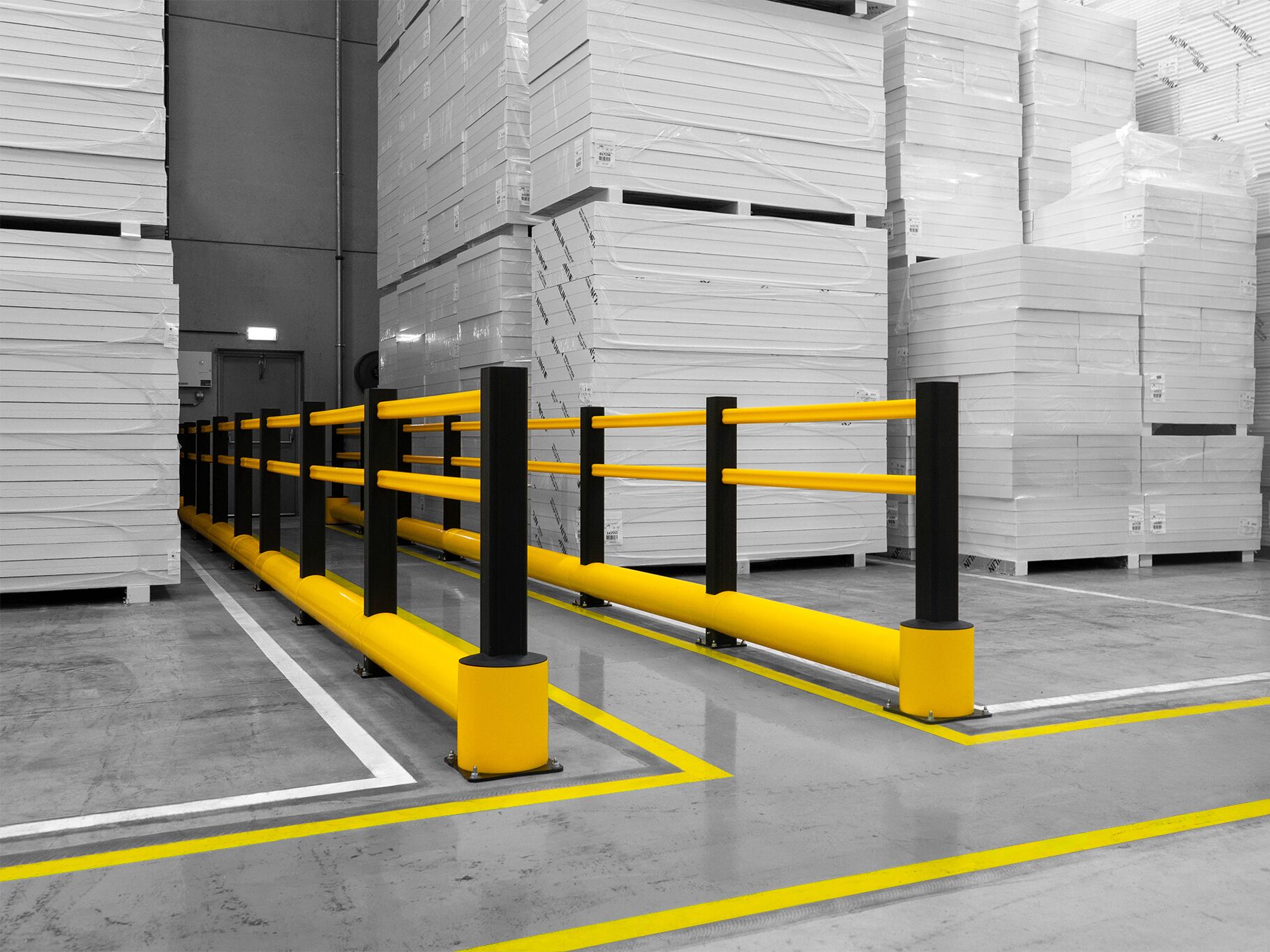
Floor marking tape makes traffic flows visible, but it does not provide a physical barrier if a vehicle deviates from its route. That is why many companies combine floor marking tape with safety barriers.
By adding physical protection around critical areas such as passageways, workstations or racking, companies create a safer working environment where visual signalling and structural protection reinforce each other.
Question & Answer session
Floor marking tape helps make traffic flows and work areas clearly visible. Employees can immediately see where they can walk, drive or work. This reduces confusion in the workplace and reduces the risk of accidents involving internal transport such as forklifts and pallet trucks. At the same time, clear floor marking tape contributes to a more efficient warehouse organisation.
In many warehouses, companies follow similar colour codes.
- Yellow is often used for traffic routes and general safety zones.
- Red usually indicates hazardous areas or zones that must be kept clear.
- Green markings often indicate emergency exits or other safety features.
- Blue markings are regularly used for information zones or specific work areas.
The most important thing is that companies use colours consistently.
A safe traffic flow starts with analysing movements on the shop floor. First, map out where forklifts operate, where pedestrians pass through and where these routes intersect. Based on this, you can clearly define vehicle routes, pedestrian zones and crossing points. Floor marking tape then makes this traffic structure visible.
Both options have their own applications. Paint is often used for permanent markings that need to remain in place for a long time. Floor marking tape is quicker to install and easier to adjust when the warehouse layout changes. The best choice depends on factors such as traffic intensity, wear and tear, and the level of flexibility required.
This depends on the load placed on the floor. In warehouses with heavy forklift traffic, markings can wear out more quickly, especially at intersections and turning points. It is therefore advisable to check floor marking tape regularly. As soon as lines fade or become less visible, they should be renewed.
Floor marking tape helps make traffic flows visible, but does not provide physical protection. If a forklift deviates from its route, a line on the floor will not stop the vehicle. That is why many companies combine floor marking tape with safety barriers around critical areas such as passageways, workstations and storage areas.
There are generally no specific laws that prescribe exactly how floor marking tape must be applied in a warehouse. However, under occupational safety legislation, employers must ensure a safe working environment and clear risk signalling.
Many companies therefore base their use of floor marking tape on international safety communication standards such as ISO 3864 and ISO 7010, or on industry best practices for visual management. These standards define how safety colours should be used to clearly indicate hazards, safe zones and mandatory actions.
In practice, floor marking tape must be clear, logical and consistent so that employees can immediately understand how to move safely through the warehouse.