Joule makes impact resistance tangible
The joule is a fundamental unit of physics and offers a perfect way to quantify energy in everyday life. This is why we use this unit to convey the impact resistance of our FLEX IMPACT® safety products.
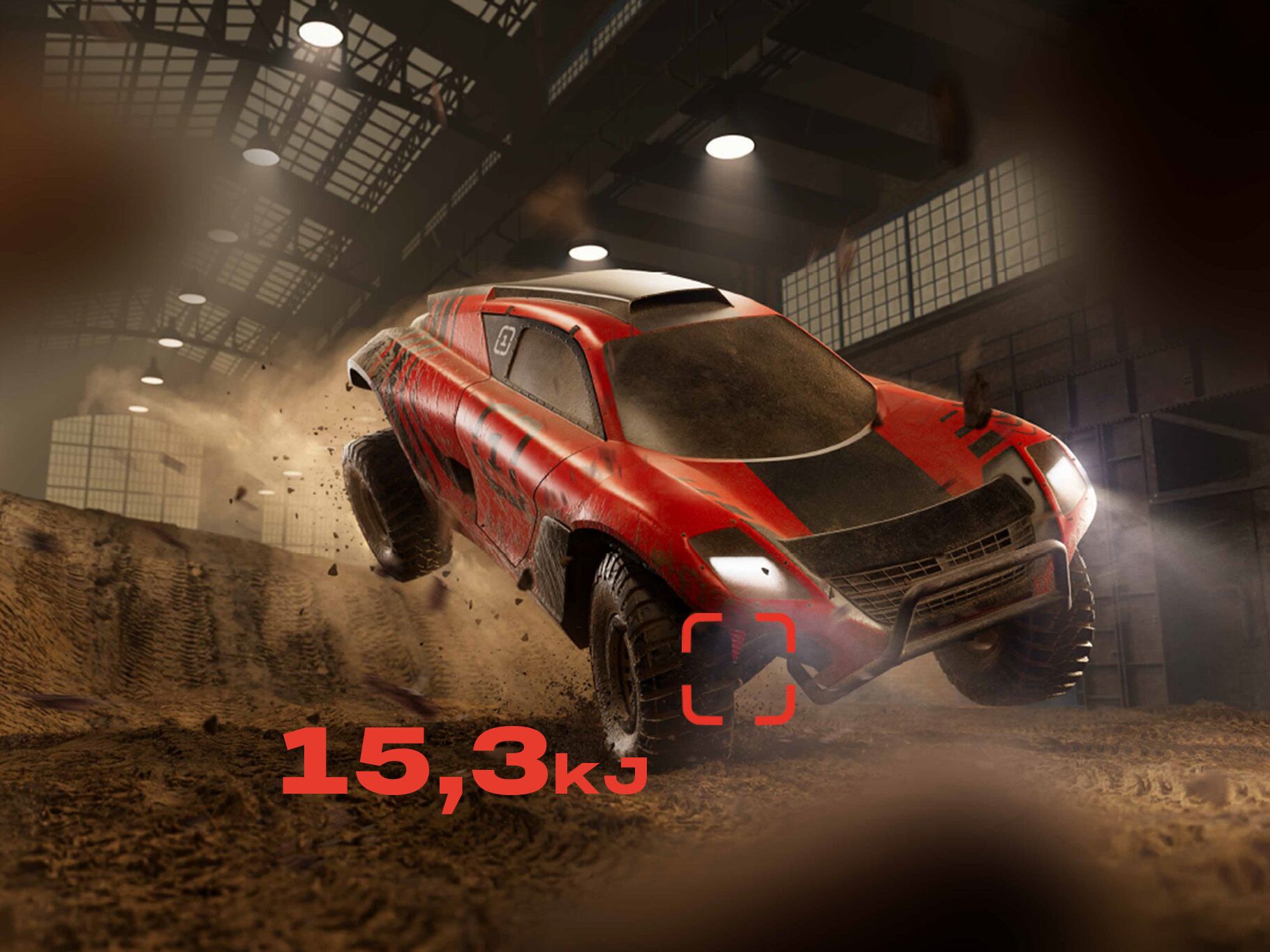
JOULE FOR BEGINNERS: WHAT IS A JOULE?
Simply put, the joule is the unit of energy used to measure the amount of work or energy required to do something. It tells you how much energy is used, transferred or converted in a given situation.
We illustrate this with a few examples:
- Lifting an object: imagine yourself lifting a book off the floor and placing it on a shelf. We measure the energy used to lift the book in joules.
- Heating water: if you heat water on a hob or in a kettle, we measure the energy used to raise the temperature in joules.
- Running: when you run or walk, you convert the energy stored in your body into kinetic energy. We measure this energy in joules.
HOW IT WORKS
HOW DO OUR SAFETY PRODUCTS ABSORB ENERGY?
When a forklift hits an obstacle, it transfers a certain amount of energy to that obstacle. To stop the forklift, the obstacle has to exert a force over a certain distance.
When the obstacle is extremely rigid, such as a steel or concrete post, this distance is very short. As a result, the force is very high. The forklift stops abruptly, causing significant damage to the obstacle and vehicle and giving the operator a strong shock.
Boplan’s polymer safety barriers behave differently. Thanks to their unique flexibility and high impact resistance, they absorb much more of the energy generated during a collision. This makes the impact less aggressive for the operator while still maintaining the necessary rigidity to stop the vehicle within an acceptable distance.
This difference is clearly reflected in the lower ASI (Acceleration Severity Index) of our polymer barriers. This is an indicator of reduced impact severity experienced by the operator and improved safety for people, vehicles and infrastructure.
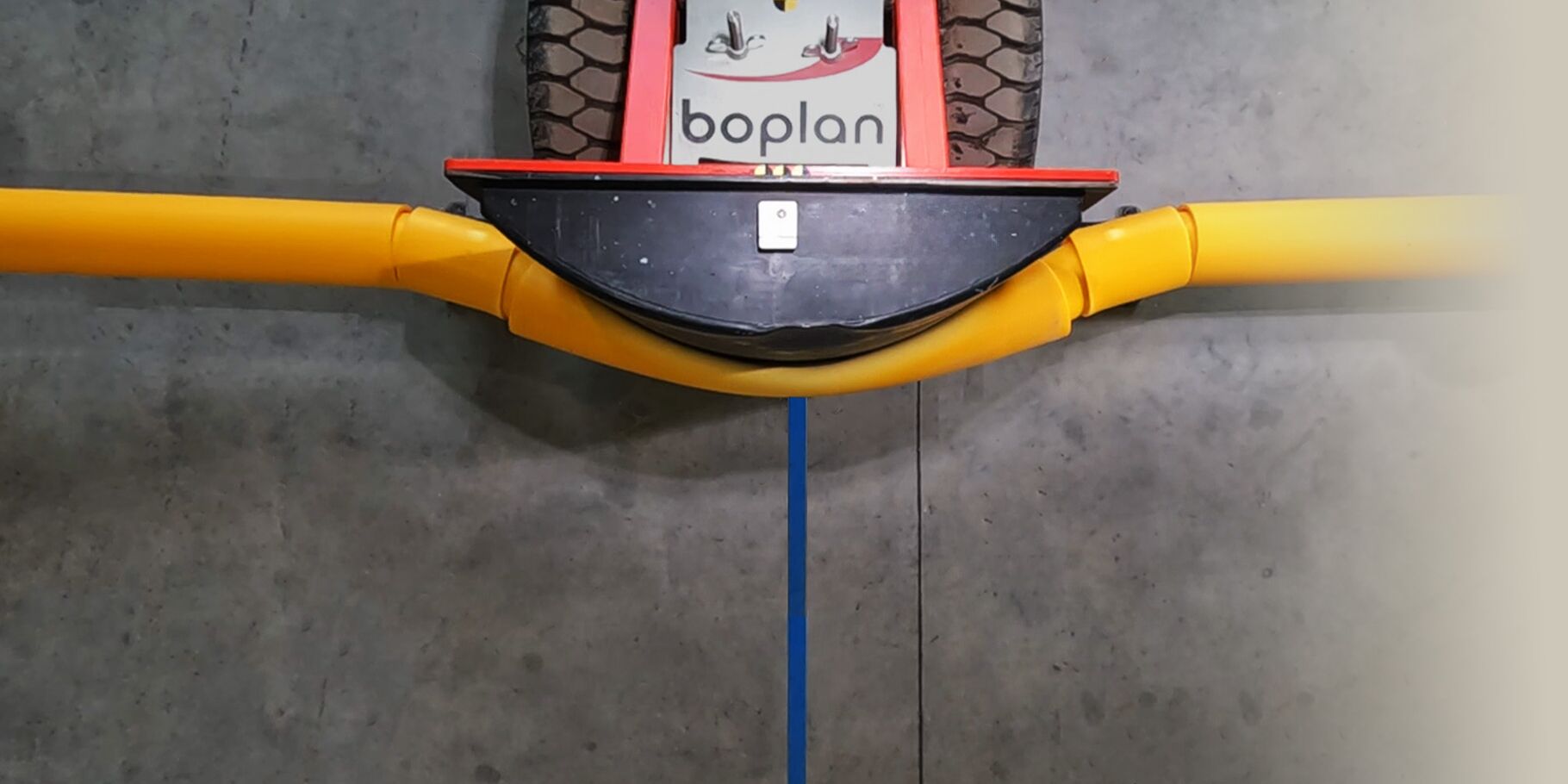
HOW DO WE CALCULATE THE IMPACT ABSORPTION VALUES OF OUR SAFETY PRODUCTS?
We measure the impact absorption of our safety products in joules. This makes it easy to compare products and choose the impact absorption value you need.
The impact absorption value varies depending on the angle of impact. We measure impact values for our products at various angles. These reflect realistic collision scenarios, ranging from light side impacts to full frontal collisions. This allows us to accurately simulate how our barriers perform in real-life situations.
Use the Boplan Impact Calculator to determine which product you need, based on the loaded vehicle’s weight, speed, and angle of impact.
WHAT DOES THIS MEAN?
AN IMPACT ABSORPTION VALUE OF 24.1 KJ
Have you ever had to push a car? If you have, you know how much effort it takes to get it moving.
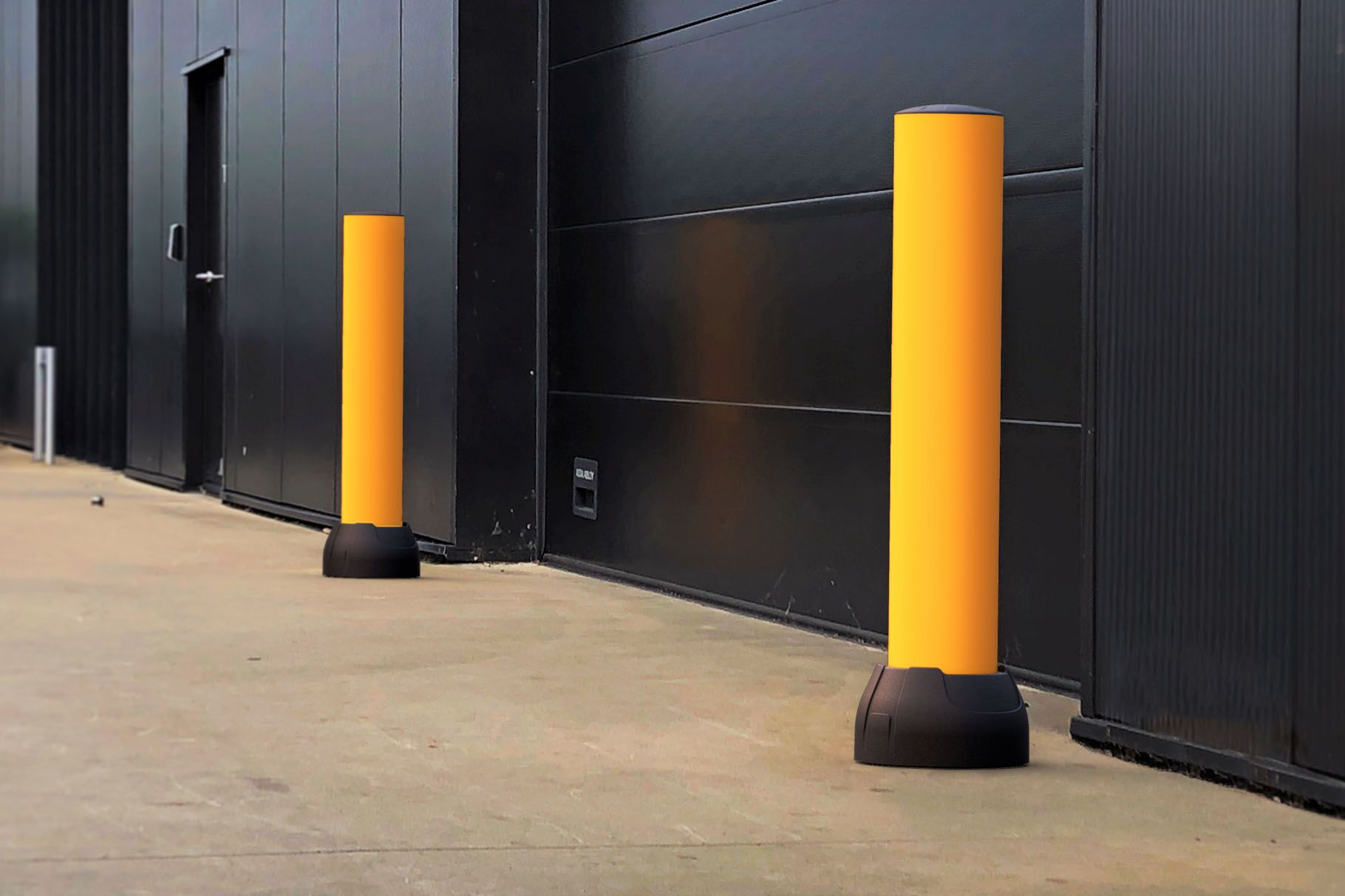
Our FLEX IMPACT® BO250T bollard has an impact absorption value of 24,100 J or 24.1 kJ at a height of 0.61 m. To stop our 4,000 kg test vehicle at an impact value of 24.1 kJ over a distance of 0.5 m, our BO250T generates a counterforce force of 48,200 N or 4,820 kg, which is equivalent to the force of 120 people.